In the digital age, speed and efficiency are paramount. Many people wonder, "why is fiber optic internet faster than copper?" Understanding this difference is crucial for consumers and businesses alike. Fiber optic technology utilizes light to transmit data, offering significant advantages over traditional copper cables. The result is faster download and upload speeds, lower latency, and better overall performance.
With fiber optics, data travels at the speed of light. This leads to high bandwidth capacity, allowing multiple connections without degrading speed. On the other hand, copper cables struggle with interference and signal degradation over distances. Users often experience lag during peak usage times.
While fiber optics may have a higher installation cost, they provide long-term benefits. As demand for internet speed grows, fiber remains a resilient choice for reliable connectivity. However, some areas still lack access to this technology, prompting a reevaluation of infrastructure priorities. Understanding these nuances helps illustrate the evolving landscape of internet connectivity.
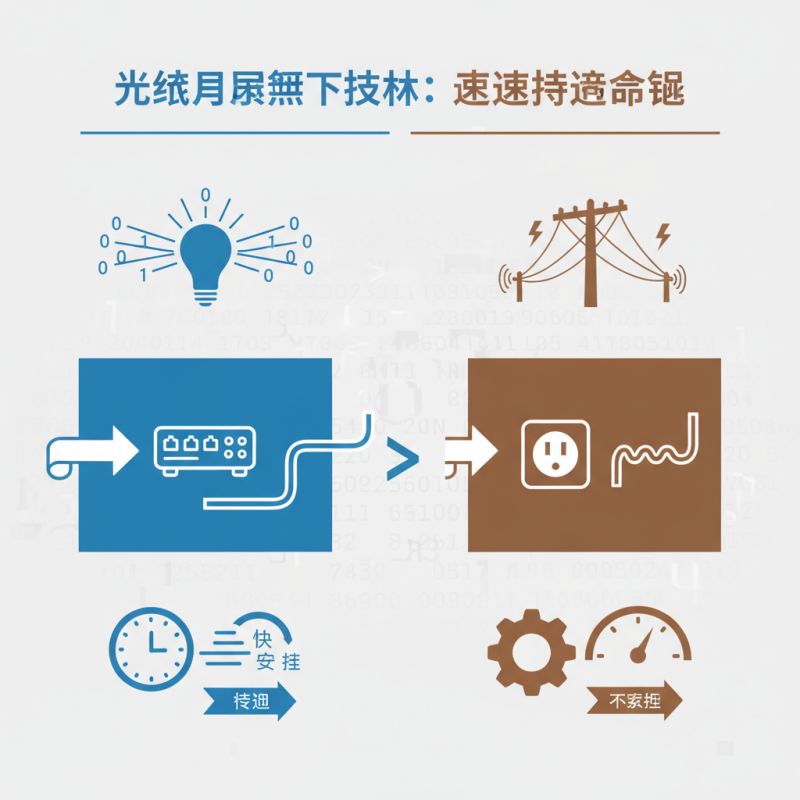
Understanding Fiber Optic Technology vs. Copper Wiring
Fiber optic technology revolutionizes internet speed and reliability. Compared to traditional copper wiring, fiber optics uses light signals to transmit data. This method allows for monumental increases in bandwidth. Studies show that fiber can deliver up to 1 Gbps, with capabilities reaching 10 Gbps in some areas.
Copper wires face limitations due to resistance and interference. Signal degradation occurs over distance, leading to slower speeds. A 2022 report highlighted that fiber optic connections can maintain their speeds over much longer distances than copper. Distances of 1,000 meters can yield full speeds with fiber, while copper struggles beyond 100 meters. This is crucial as demand for high-speed internet grows.
Users of fiber optic internet often experience lower latency. The latency in fiber connections is typically less than 20 ms, while copper can average around 30 ms. Many professionals report improved performance in remote work scenarios and online gaming. However, fiber installation can require a significant upfront investment. Some may find this daunting, pondering whether the benefits justify the cost.
2026 Best Fiber Optic Internet: Why is it Faster than Copper? - Understanding Fiber Optic Technology vs. Copper Wiring
| Technology |
Speed (Mbps) |
Latency (ms) |
Distance Limit (km) |
Interference |
Installation Cost |
| Fiber Optic |
1000 - 10000 |
1 - 10 |
40 - 100 |
No |
High |
| Copper Wiring |
1 - 1000 |
5 - 50 |
0.1 - 2 |
Yes |
Low |
| Coaxial Cable |
10 - 1000 |
10 - 20 |
0.5 - 1 |
Yes |
Medium |
Key Advantages of Fiber Optics in Internet Speed and Performance
Fiber optic internet holds remarkable advantages over traditional copper connections, primarily in speed and performance. Fiber optics use light to transmit data, allowing for higher bandwidth. Studies show that fiber can support internet speeds exceeding 1 Gbps, while most copper connections peak around 100 Mbps. This vast difference highlights why many experts advocate for fiber optics in modern internet infrastructure.
Latency is another critical factor. Fiber reduces latency, often to as low as 5 milliseconds. In contrast, copper can experience delays exceeding 20 milliseconds. Such reductions significantly enhance real-time communications and gaming experiences. Reports indicate that businesses embracing fiber optics report improvements in application performance and customer satisfaction.
However, transitioning to fiber optics is not without its challenges. The initial installation costs can be substantial. Infrastructure development requires thoughtful planning, and many areas may lack adequate service. In spite of these hurdles, the long-term benefits of fiber optics—such as enhanced speed and reduced latency—outweigh the difficulties. Fiber optics exemplify the next stage in internet evolution, promising a more connected future.
Comparative Data: Latency and Bandwidth of Fiber vs. Copper Connections
Fiber optic internet is known for its remarkable speed. This speed comes from its ability to transmit data via light signals. In contrast, copper connections use electrical signals. This fundamental difference is one reason fiber optic internet excels in bandwidth and latency.
Latency measures the time it takes for data to travel between two points. According to industry reports, fiber optic connections often achieve latency as low as 1-5 milliseconds. Copper, however, can have latencies ranging from 20-200 milliseconds. Such delays can impact activities like gaming or video conferencing, where rapid response is critical.
Bandwidth also differs significantly. Fiber optics can support up to 10 Gbps and beyond. Many copper connections max out at just 1 Gbps. This disparity is crucial as more devices connect to the internet. Higher bandwidth means more data can flow simultaneously without slowing down the connection.
Tips: When choosing an internet service, prioritize your usage needs. If you stream or game frequently, fiber optics may provide a smoother experience. Always check the fine print on service agreements. Some copper-based services may have hidden throttling policies.
Real-world Applications: Fiber Optic Internet's Impact on User Experience
Fiber optic internet has transformed how users experience connectivity. Its speed and reliability are due to light transmission, contrasting starkly with the limitations of copper wires. According to a report by the Fiber Broadband Association, fiber technology can deliver speeds exceeding 1 Gbps, whereas copper typically maxes out at 100 Mbps. This is a huge difference. Higher speeds lead to smoother streaming, faster downloads, and reduced latency for online gaming.
Many users report noticeable improvements in their daily activities. For instance, remote work has become significantly more efficient. Seamless video conferencing is now the norm, with fewer disruptions. A 2022 survey found that 78% of users highlighted reduced buffering during video streaming with fiber optics. However, fiber optic deployment still faces challenges. Many rural areas lack access to this technology, limiting its potential benefits. Bridging this gap remains a critical concern for future connectivity.
Moreover, while fiber’s advantages are compelling, initial installation costs can be high. This factor leads some users to remain with traditional copper networks. The ongoing debate around speed versus cost shows that fiber is not a one-size-fits-all solution. Users must weigh immediate needs against potential long-term gains. This nuance adds depth to the discussion of fiber optic versus copper technologies.
Future Trends: The Shift to Fiber Optics in Global Internet Infrastructure
The global internet infrastructure is undergoing a significant transformation as fiber optics gain traction. Recent reports indicate that fiber optic connections can reach speeds up to 100 Gbps. This is starkly faster than traditional copper cables, which typically max out at 1 Gbps. The rise in data consumption, especially with the advent of 5G and IoT devices, makes fiber optics essential.
The shift is not just about speed. Fiber optics are more reliable, less susceptible to interference compared to copper. Reports show that fiber networks have a failure rate of less than 0.1%. This reliability leads to improved user experiences, especially as remote work and streaming services grow. However, the transition has challenges. Infrastructure costs for laying fiber can be substantial, and rural areas often lack access.
Experts suggest that by 2026, over 70% of the global internet connections may leverage fiber optics. This shift could lead to more equitable access to high-speed internet. Existing copper infrastructures may struggle to keep up with future data demands. Embracing fiber optics could bridge the digital divide, yet significant investment and strategic planning are necessary to ensure widespread adoption and sustainability.
Internet Speed Comparison: Fiber Optic vs. Copper
This chart illustrates the average speed comparison between fiber optic and copper internet connections. Fiber optic technology offers significantly faster speeds, making it a preferred choice for future internet infrastructure.
FAQS
: Fiber optic technology uses light signals to transmit data, increasing speed and reliability significantly.
Fiber optics can deliver speeds up to 1 Gbps. Some areas even support 10 Gbps connections.
Copper wiring experiences resistance and interference, leading to slower speeds and signal degradation over distances.
Fiber connections usually have latency under 20 ms, while copper averages around 30 ms, affecting performance.
Fiber reduces buffering, enhances streaming quality, and supports seamless video conferencing for remote work.
Yes, many rural areas lack access to fiber, limiting its widespread benefits and creating a connectivity gap.
Users should consider installation costs, immediate needs, and potential long-term benefits when evaluating fiber options.
Yes, many users report improved efficiency and performance in online activities like gaming and streaming.
Not necessarily; the choice depends on personal needs, location, and cost considerations.
Initial investment for fiber optic installation can be high, leading some to hesitate in switching from copper.
Conclusion
Fiber optic internet offers significant advantages over traditional copper wiring, primarily due to its construction and technology. Understanding fiber optic technology reveals that it uses light signals transmitted through thin glass or plastic fibers, allowing for higher speeds and greater bandwidth. This is a key reason why is fiber optic internet faster than copper, as copper wiring relies on electrical signals, which are more susceptible to interference and degradation over distance.
The comparative data on latency and bandwidth further emphasizes the superiority of fiber optics, providing users with a smoother online experience. Real-world applications demonstrate how fiber optic internet enhances activities like streaming, gaming, and remote work. Looking towards the future, the global shift towards fiber optics highlights its role in modern internet infrastructure, ensuring faster and more reliable connections for users worldwide.

 XT Cabled