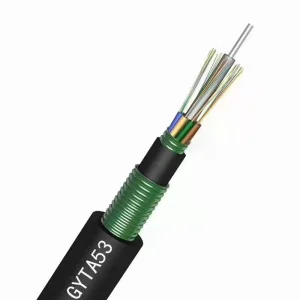
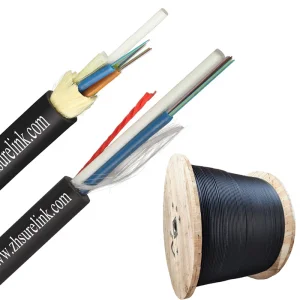
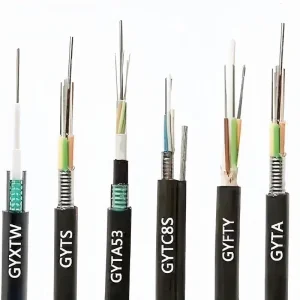
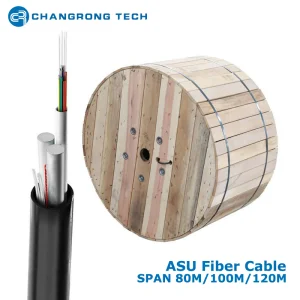
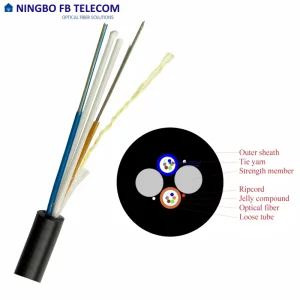
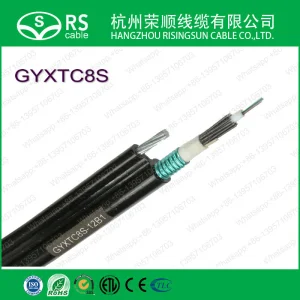
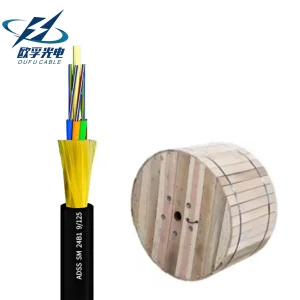
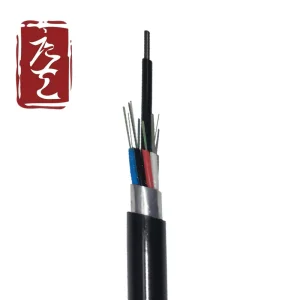
In the rapidly evolving landscape of telecommunications, the demand for high-speed data transmission and robust infrastructure has never been greater. ADSS (All-Dielectric Self-Supporting) fiber cables have emerged as the gold standard for aerial installations, particularly in environments dominated by high-voltage power lines. Unlike traditional optical cables that require a messenger wire for support, ADSS cables are engineered with high-strength aramid yarns, allowing them to support their own weight and withstand environmental stressors such as wind and ice without any metallic components.
The global shift toward 5G densification and smart grid modernization has significantly boosted the relevance of ADSS fiber cable factories. In regions like Latin America (specifically Brazil), the adoption of ASU and Mini ADSS cables has revolutionized rural internet access. Meanwhile, in North America and Europe, the focus remains on "Utility-Grade" ADSS, capable of spanning hundreds of meters between high-tension towers. The "Information Gain" here lies in the cable's ability to resist the Space Potential—a phenomenon where high-voltage fields can degrade standard cable jackets. Modern ADSS factories now utilize specialized "Track-Resistant" (AT) sheaths to mitigate this risk, a critical factor for long-term reliability.
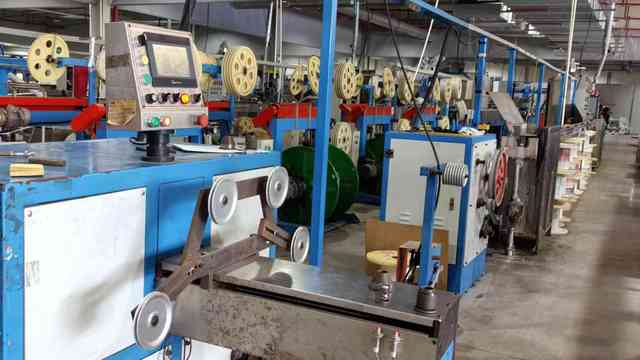
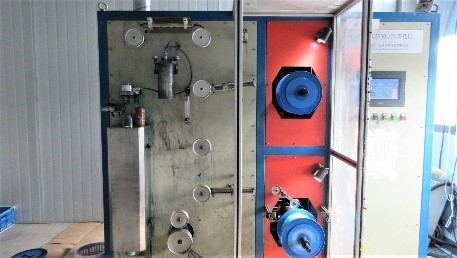
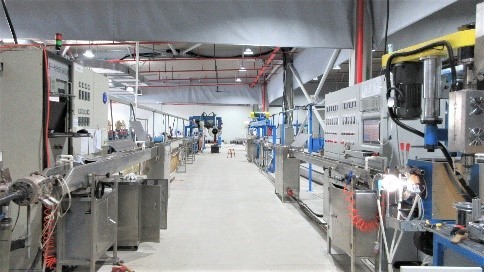
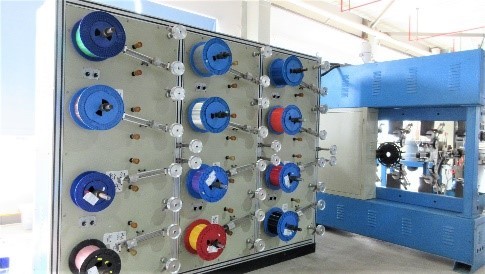
Dongguan XT Cabled Co., Ltd. leverages state-of-the-art extrusion lines that ensure consistent jacket thickness and fiber tension control, essential for aerial span performance.
Our factory utilizes premium aramid yarns (Kevlar) in a precise helical wrap, ensuring the cable maintains its structural integrity under extreme tensile loads.
Integrated testing for 110kV/220kV environments. Our ADSS cables are designed to coexist with high-voltage lines without electromagnetic interference.
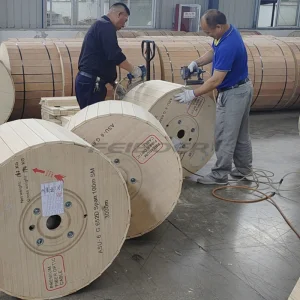
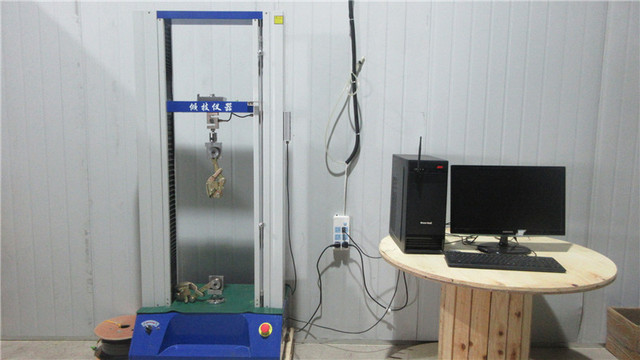
Located in the heart of Guangdong's manufacturing hub, XT Cabled embodies the "Industry 4.0" philosophy. Our Dongguan ADSS Fiber Cable Factory integrates real-time quality monitoring from pre-form testing to final plywood drum winding. This ensures that every meter of cable—whether it's a 144-core high-count trunk or a 2-core drop ASU—meets the rigorous standards required for global telecommunications infrastructure.
A professional ADSS cable factory must master several key components to ensure a 25-year service life:
Procurement directors must calculate the "Rated Tensile Strength" (RTS) versus the "Maximum Allowable Tension" (MAT). In our factory, we simulate these conditions using climatic load modeling (NESC standards) to recommend the ideal span—ranging from 80m for distribution to 1000m for long-haul crossings.
In Brazil and Colombia, cost-efficiency is key. Our Mini ADSS ASU cables provide a simplified single-tube structure that reduces installation time and shipping costs while maintaining high durability.
For high-temperature environments, we utilize UV-stabilized outer sheaths and higher melting point buffer compounds to prevent "drip" and ensure signal stability at 70°C+.
Integrating fiber communication into power grids for real-time monitoring of transformers and substations using our hybrid fiber-power solutions.
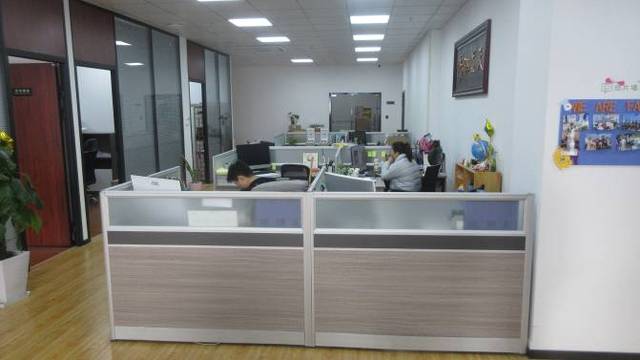
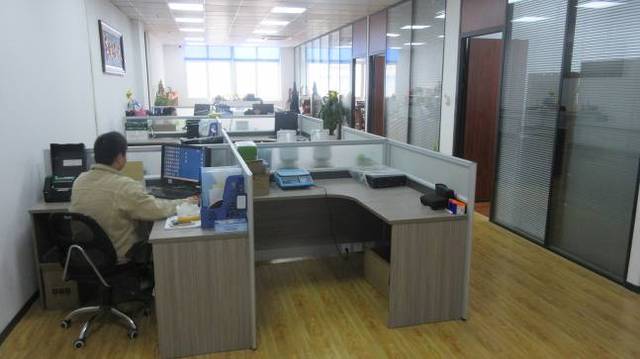
Dongguan XT Cabled Co., Ltd. is a professional manufacturer specializing in fiber optic cables and optical connectivity solutions for industrial, telecommunications, and data center applications. Established in 2012, the company is located in Dongguan, Guangdong Province, one of China's leading manufacturing hubs. With a production facility covering over 12,000 square meters and a team of more than 180 employees, XT Cabled is committed to delivering reliable, high-performance fiber optic products to customers worldwide.
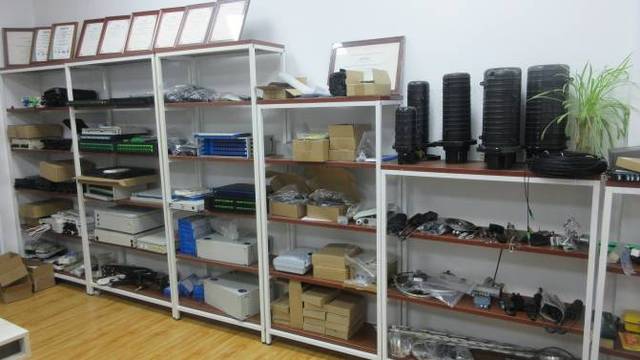
The company's product portfolio includes single-mode fiber optic cables, multi-mode fiber optic cables, FTTH cables, armored fiber optic cables, outdoor fiber cables, indoor fiber cables, data center cabling solutions, industrial optical cables, and customized optical connectivity products. These solutions are widely used in telecommunications networks, broadband infrastructure, smart buildings, industrial automation systems, cloud computing facilities, and large-scale data centers.
XT Cabled operates advanced production lines and testing laboratories equipped with modern inspection instruments to ensure product consistency and compliance with international quality standards. The company follows strict quality management procedures throughout material sourcing, manufacturing, testing, and delivery processes. Its products are manufactured in accordance with recognized industry standards and are supplied to customers across North America, Europe, Southeast Asia, the Middle East, and other global markets.
In addition to standard products, XT Cabled provides OEM and ODM manufacturing services, supporting customers with customized cable structures, specifications, packaging, and branding requirements. Through continuous investment in technology, manufacturing efficiency, and customer service, Dongguan XT Cabled Co., Ltd. strives to be a trusted partner for global optical communication and network infrastructure projects.
Q1: What is the typical lifespan of an ADSS cable from your factory?
A: Our ADSS cables are designed for a 25-30 year service life. This is achieved through the use of UV-stabilized materials and high-quality aramid yarns that resist environmental degradation over time.
Q2: How do I choose between Single Jacket and Double Jacket ADSS?
A: Single Jacket is ideal for shorter spans (up to 100m-150m) and lighter environmental loads. Double Jacket provides enhanced protection against mechanical stress and moisture, making it suitable for spans over 200m or in high-wind regions.
Q3: Do your ADSS cables support the Brazil ASU standard?
A: Yes, we are a leading manufacturer of ASU80 and ASU120 cables, which are widely used in the Brazilian ISP market for their cost-effectiveness and durability in aerial deployments.
Q4: Can the cable be installed on 110kV power lines?
A: Absolutely. For installations on power lines where the space potential exceeds 12kV, we utilize "Anti-Tracking" (AT) outer sheath materials to prevent electrical erosion.
Q5: What is the lead time for custom OEM orders?
A: Depending on the complexity and core count, our standard production lead time is 2-3 weeks, thanks to our large-scale facility in Dongguan.
 XT Cabled