China Top 10 Fiber Optic Network Advantages for Global Buyers

Time:2026-10-12 Author:Aria
0%

China Top 10 Fiber Optic Network Advantages for Global Buyers explores why Chinese fiber solutions attract telecom operators, data centers, enterprises, and infrastructure developers worldwide. The key question is practical: what are the advantages of fiber optic networks in demanding communication environments? Fiber cables support high bandwidth, low latency, long-distance transmission, and strong resistance to electromagnetic interference. These features matter when a data center handles continuous traffic or a rural connection spans several kilometers.

Chinese manufacturers also offer broad product choices, including single-mode fiber, multimode fiber, armored cables, fiber patch cords, splitters, and complete passive optical network components. Buyers can often request customized jacket materials, connector types, cable lengths, and packaging. Many established suppliers use factory testing, OTDR inspection, insertion-loss measurement, and traceable quality records. These practices help reduce uncertainty before shipment. Certifications and independent test reports still require careful verification.

Cost efficiency is another attraction, but low price alone should never define a reliable purchase. A cheaper cable may create higher replacement costs if attenuation, connector quality, or environmental protection is weak. Experienced buyers compare specifications, sample performance, warranty terms, production capacity, and after-sales support. They also check compatibility with existing equipment and regional installation conditions.

Details matter.

China’s mature manufacturing ecosystem can support large orders and stable replenishment. However, delivery schedules, documentation, and quality consistency may vary between suppliers. Buyers should request samples and written test data before approving mass production. This article examines ten practical advantages while recognizing an important limitation: no supplier or network design fits every market. Careful evaluation remains essential.
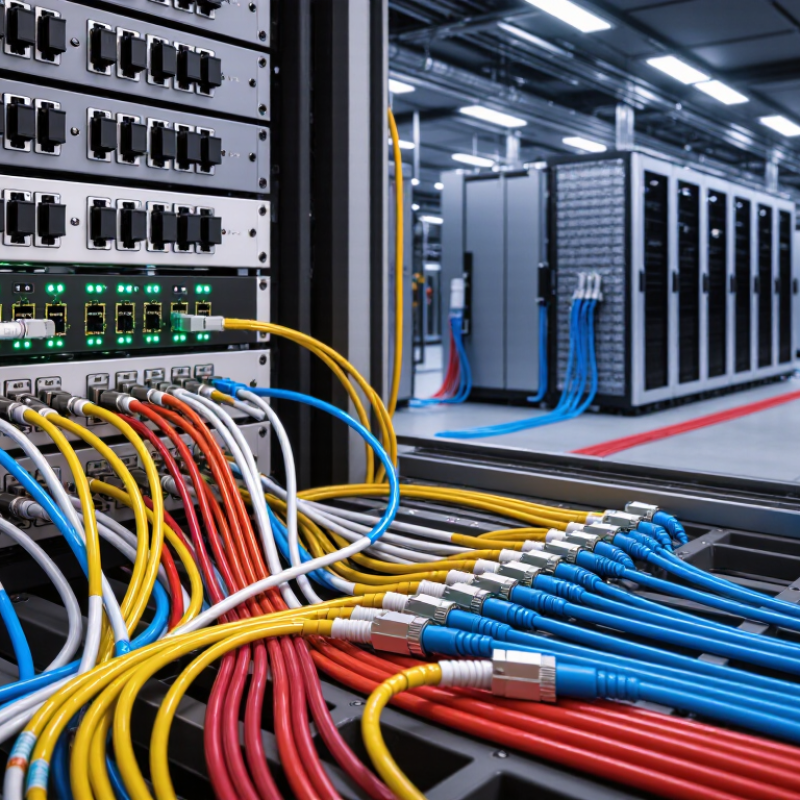
China Top 10 Fiber Optic Network Advantages for Global Buyers

What Defines China’s Fiber Optic Network Industry

China Top 10 Fiber Optic Network Advantages for Global Buyers

What Defines China’s Fiber Optic Network Industry

China’s fiber optic industry is defined by scale, dense infrastructure, and fast commercial deployment. The Ministry of Industry and Information Technology reported more than 1.1 billion fiber access ports by the end of 2024. It also recorded over 200 million gigabit broadband users. These figures create a demanding domestic test environment for optical cables, splitters, connectors, and 10G PON equipment.

Scale changes purchasing decisions.

The FTTH Council Global Alliance’s 2024 market panorama places China among the largest FTTH/B markets, with more than 400 million subscribers. Large domestic demand supports specialized production lines and shorter equipment validation cycles. Manufacturers can refine products through repeated field applications, not only laboratory testing. This experience benefits overseas buyers seeking stable specifications, flexible configurations, and high-volume supply.

The industry also shows strong vertical coordination. Raw materials, fiber drawing, cable production, testing, and installation services often operate within one broad supply network. That structure can reduce lead times and simplify technical communication. However, lower prices should not automatically signal better value. Buyers still need to check attenuation, tensile strength, bend performance, environmental ratings, and compliance documents. Regional quality consistency remains an issue worth examining. A factory audit and independent sample testing may reveal differences hidden by attractive quotations.

How China Delivers High-Speed and Reliable Fiber Connectivity

China’s fiber optic industry supports fast, stable connectivity for global buyers through mature manufacturing and large-scale engineering experience. High-capacity cables can move data across offices, factories, ports, and rural communities with low signal loss. Strict production testing checks fiber clarity, connector quality, bending performance, and temperature resistance. That matters in real projects. A cable may pass a basic test but fail after months in heat, dust, or repeated handling.

Tips: Ask for insertion-loss and return-loss reports. Confirm the fiber standard, jacket material, operating temperature, and test method. Request sample testing before placing a large order. Clear specifications prevent costly surprises.

China also offers flexible production for different network designs. Suppliers can adjust cable lengths, fiber counts, packaging, and connector types for indoor or outdoor installation. Experienced technical teams often support drawings, installation questions, and fault analysis. Delivery can be efficient because component supply chains are concentrated and production capacity is broad. Still, speed should not replace verification. A low price may hide weaker materials, unclear testing, or limited after-sales support.

Field experience shows that reliable connectivity depends on the entire link, not only the cable. Splicing, cabinets, cleaning, routing, and weather protection all affect performance. No network is perfect. Buyers should inspect samples, review documentation, and test compatibility with existing equipment before shipment. This practical process helps global users gain high-speed fiber connectivity with fewer interruptions and more predictable maintenance.

Why Chinese Fiber Optic Networks Offer Competitive Global Value

China’s fiber optic networks offer global buyers a practical balance between cost, capacity, and deployment speed. Large production clusters support steady output for cables, connectors, splitters, cabinets, and testing equipment. This scale can reduce unit costs without automatically reducing technical performance. Buyers often gain more configuration choices, including indoor, outdoor, armored, ribbon, and high-density designs. Shorter sourcing paths also help projects respond to changing quantities.

Engineering value matters beyond the purchase price. Experienced manufacturers commonly provide drawings, loss budgets, sample testing, and installation guidance. Many facilities use factory inspection, optical-loss measurement, tensile tests, and environmental checks before shipment. These steps improve traceability and help buyers compare suppliers with clearer evidence. Chinese producers also serve varied climates, from humid coastal areas to dry, cold regions, allowing practical adaptation in cable jackets and hardware. International standards are useful references, but independent verification remains important.

The picture is not flawless. A low quotation may hide weaker documentation, inconsistent batches, or limited after-sales support. Buyers should request test reports, production records, warranty terms, and replacement procedures. Trial orders can reveal packaging quality and connector performance before a larger rollout. Some suppliers communicate quickly, while others need stricter project management. That difference matters. With careful audits and realistic specifications, global buyers can turn manufacturing scale into dependable network value.

How Manufacturing Scale Supports Customization and Rapid Delivery

China Top 10 Fiber Optic Network Advantages for Global Buyers

How Manufacturing Scale Supports Customization and Rapid Delivery

Large-scale fiber optic manufacturing gives global buyers more than lower production costs. It creates a wider supply base for cables, patch cords, adapters, enclosures, and testing accessories. In practice, experienced factories can adjust fiber counts, jacket materials, connector types, labels, and package sizes within one project. This flexibility helps data centers, telecom contractors, and industrial installers match local specifications without redesigning the entire system.

Manufacturing scale also supports faster delivery. Standard components can be stocked in advance, while automated cutting, polishing, assembly, and inspection reduce repeated handling. A capable production team usually separates sample orders from mass production, allowing custom prototypes to move quickly without disrupting larger schedules. Quality control should include insertion loss testing, return loss testing, visual inspection, and shipment records. Fast is useful. Fast and traceable is safer.

Tips: Ask for a sample, test report, production timeline, and packaging photos before placing a large order. Confirm tolerances in writing. Small details matter.

Scale does not solve everything. A factory may accept customization but struggle with unusual materials or very small quantities. Buyers should compare actual capacity, not only impressive catalogs. From project experience, clear drawings and early forecasts prevent more delays than urgent emails. Some delivery promises still need careful review, especially during peak seasons or after specification changes.

Key Factors Global Buyers Should Assess Before Choosing a Supplier

China Top 10 Fiber Optic Network Advantages for Global Buyers

Key Factors Global Buyers Should Assess Before Choosing a Supplier

A competitive price is useful, but it should not lead the decision. Global buyers should request fiber test reports, production samples, and clear quality records. Check insertion loss, return loss, tensile strength, and bend performance under realistic conditions. A reliable supplier can explain each measurement without hiding behind technical language. That matters during installation.

Production consistency deserves close attention. Ask whether every cable receives factory testing before shipment. Review fiber origin, connector inspection methods, packaging details, and batch traceability. A small label on each carton can prevent major confusion at a remote project site. Buyers should also examine lead times, monthly capacity, and responses to urgent changes. A supplier may promise flexibility, yet actual capacity can be limited during peak seasons.

Compliance documents should match the destination market and project requirements. Confirm applicable safety standards, material declarations, and export paperwork before placing a large order. Independent audits or video inspections can provide useful evidence, although they cannot replace physical samples. Technical support is equally important. Can the supplier provide installation guidance, drawings, and replacement procedures in clear English? Ask difficult questions early. Some quotations exclude testing, custom packaging, or shipping protection, and these omissions can damage the total project budget. In practice, the cheapest offer is not always the most economical choice. Procurement teams should compare service reliability, warranty terms, and communication speed alongside product specifications. Mistakes happen. The real test is how openly the supplier corrects them.

China Top 10 Fiber Optic Network Advantages for Global Buyers - Key Factors Global Buyers Should Assess Before Choosing a Supplier
No. Potential Advantage Technical Dimension Recognized Benchmark or Typical Requirement What Global Buyers Should Assess
1 Broad product coverage Product availability Range of passive and active fiber-network products A capable supplier may offer single-mode and multimode cable, indoor and outdoor cable, fiber distribution units, patch cords, closures, splitters, adapters, and related installation accessories. Confirm whether products are manufactured under one quality system, whether interfaces are compatible, and whether technical documentation covers every product supplied.
2 Compatibility with international standards Interoperability Fiber, cable, connector, and environmental standards Common references include ITU-T G.652.D for standard single-mode fiber, ITU-T G.657.A1/A2 for bend-insensitive fiber, IEC 60794 for optical-fiber cables, IEC 61754 for connector interfaces, and IEC 61300 for component testing. Request the exact standard edition, test method, product datasheet, and independent test reports rather than accepting a general “international standard” statement.
3 Competitive total cost Cost efficiency Purchase price, logistics, installation, and replacement cost Total cost should include the product price, packaging, shipping, duties, field installation time, expected service life, warranty handling, and spare-parts needs. Compare equivalent specifications and Incoterms, request a landed-cost quotation, and check whether a lower price is caused by reduced fiber count, weaker jackets, or lower-grade components.
4 Scalable manufacturing capacity Supply continuity Production capacity, lead time, and delivery consistency Large network projects may require staged deliveries, repeat orders, and consistent dimensions across multiple production batches. Ask for realistic monthly capacity, standard and customized lead times, capacity reservation procedures, production schedules, and a contingency plan for material shortages or demand peaks.
5 Customization capability Project fit Cable construction, fiber count, jacket, labeling, and packaging Common customization areas include fiber count, loose-tube or tight-buffer design, outdoor or indoor jackets, armored construction, connector type, drum length, markings, and private project labels. Approve a golden sample, freeze the bill of materials, define allowable tolerances, and require written confirmation that future batches will use the same construction.
6 Quality-control traceability Process control Incoming inspection, in-process testing, and final inspection Relevant checks can include attenuation, return loss, geometry, tensile strength, crush resistance, bend performance, dimensional inspection, connector end-face inspection, and visual appearance. Request batch numbers, inspection records, calibration certificates, sampling plans, nonconformance procedures, and the ability to trace each shipment to raw materials and production dates.
7 Suitability for demanding environments Reliability Temperature, moisture, mechanical, ultraviolet, and installation resistance Outdoor designs may require water blocking, UV-resistant jackets, crush resistance, tensile strength, and temperature ratings appropriate to the installation location. Indoor designs may require suitable flame-retardant or low-smoke materials where local codes require them. Match the cable design to the route conditions and verify test results for the required temperature range, tensile load, crush load, water penetration, flame behavior, and minimum bend radius.
8 Faster technical communication Project execution Engineering response, drawing approval, and troubleshooting support Complex deployments require clear specifications, cable schedules, fiber allocation plans, installation instructions, test procedures, and responsive handling of engineering changes. Evaluate response time before purchase, confirm the available support languages, define an escalation route, and include document-delivery deadlines in the contract.
9 Export and compliance readiness Market access Documentation, restricted substances, packaging, and destination requirements Depending on the destination, buyers may need certificates of conformity, material declarations, RoHS or REACH-related documentation, safety data, country-of-origin documents, export packaging, and customs information. Provide the destination country and applicable regulations in advance, then verify document validity, product marking, wooden-packaging treatment, customs descriptions, and responsibility for regulatory updates.
10 Structured warranty and after-sales support Lifecycle protection Warranty scope, failure analysis, replacement, and claims process A practical warranty should define coverage, exclusions, claim evidence, response time, replacement or repair procedures, shipping responsibility, and the treatment of defects discovered after installation. Review the written warranty, require failure-analysis reports for disputed cases, clarify storage and installation conditions, and confirm the availability of compatible replacement products over the project life cycle.

FAQS

Why is fiber connectivity considered fast and reliable?

High-capacity fiber cables carry data with low signal loss. They connect offices, factories, ports, and rural communities. Reliability depends on the complete link, not only the cable.

What quality tests should buyers request?

Request insertion-loss and return-loss reports. Also check fiber clarity, connector quality, bend performance, tensile strength, and temperature resistance. Testing methods should be written clearly.

Why should buyers test samples before ordering in volume?

A sample can reveal compatibility problems early. Test it with existing equipment. Check connectors, bending, packaging, and signal performance. Basic testing may miss long-term heat damage.

What customization options are commonly available?

Suppliers may adjust cable length, fiber count, jacket material, connector type, labels, and package size. Indoor and outdoor designs often need different materials.

How does large-scale production support faster delivery?

Standard components may be stocked in advance. Automated cutting, polishing, assembly, and inspection can reduce delays. Fast delivery is useful, but traceability matters more.

What should buyers check beyond the product price?

Compare testing, packaging, shipping protection, technical support, warranty terms, and communication speed. A cheap quotation may exclude important services. That changes the real cost.

How can buyers evaluate production consistency?

Ask whether every cable receives factory testing. Review batch records and carton labels. Confirm monthly capacity and lead times. Peak seasons can disrupt attractive promises.

What support should a reliable supplier provide?

Clear installation guidance, drawings, fault analysis, and replacement procedures are valuable. Support should be understandable in English. Some explanations may still be incomplete.

Which compliance documents should buyers confirm?

Confirm applicable safety standards, material declarations, and export paperwork. Requirements depend on the destination and project. Independent inspections help, but samples remain necessary.

What causes fiber networks to fail after delivery?

Poor splicing, dirty connectors, weak routing, damaged cabinets, and inadequate weather protection can reduce performance. The cable may be correct. The installation may not be.

Conclusion

China’s fiber optic network industry is defined by mature manufacturing capabilities, integrated supply chains, strong engineering expertise, and continuous investment in connectivity infrastructure. These strengths help manufacturers deliver high-speed, stable, and low-latency fiber solutions for telecommunications, data centers, enterprise networks, and smart infrastructure. So, what are the advantages of fiber optic networks? They include greater bandwidth, reliable long-distance transmission, resistance to electromagnetic interference, improved security, and lower maintenance needs compared with many traditional copper-based systems.

For global buyers, Chinese fiber optic networks also offer competitive value through manufacturing scale, flexible product customization, and efficient production scheduling. Suppliers can often adapt cable structures, connector types, performance specifications, packaging, and documentation to meet different project requirements. Before choosing a supplier, buyers should assess product quality, testing procedures, technical support, delivery consistency, certification capability, communication efficiency, and after-sales service. A careful evaluation of these factors can help international customers achieve dependable performance, controlled costs, and smoother project implementation.

Aria

Aria

Aria is a dedicated marketing professional with a deep passion for innovative strategies and a keen understanding of our company's product offerings. With a wealth of experience in the industry, Aria excels at crafting engaging content that highlights the unique features and benefits of our......