Why Do Fiber Optic Cables Last So Long?

Time:2026-11-02 Author:Mason
0%

A fiber-optic cable can sit in a building for decades, carrying data through glass strands thinner than a human hair. Yet the answer to “how long does fiber optic cable last” depends on more than the glass itself. Installation quality, moisture, heat, cable tension, and physical damage all matter. A cable tucked safely inside a conduit faces different risks from one exposed to sun, water, or repeated movement.

The glass core does not corrode like metal. That helps explain its long service life. Still, connectors, protective jackets, and installation points can fail sooner than the fiber. A sharp bend behind a wall plate may weaken the signal, even when the cable looks untouched. Small details count. Sometimes, the weak point is not where you expect.

This guide will examine typical lifespan estimates, indoor and outdoor conditions, and signs that a cable may need attention. It will also separate the cable’s expected life from the useful life of the equipment connected to it. Those are not always the same. A careful answer needs reliable evidence and an accountable specialist. No source article or verified expert quotation was supplied here, so I won’t invent a named expert’s words. A sourced quotation should be added before publication; otherwise, readers deserve a clear explanation of what is known, what varies, and what still needs checking.
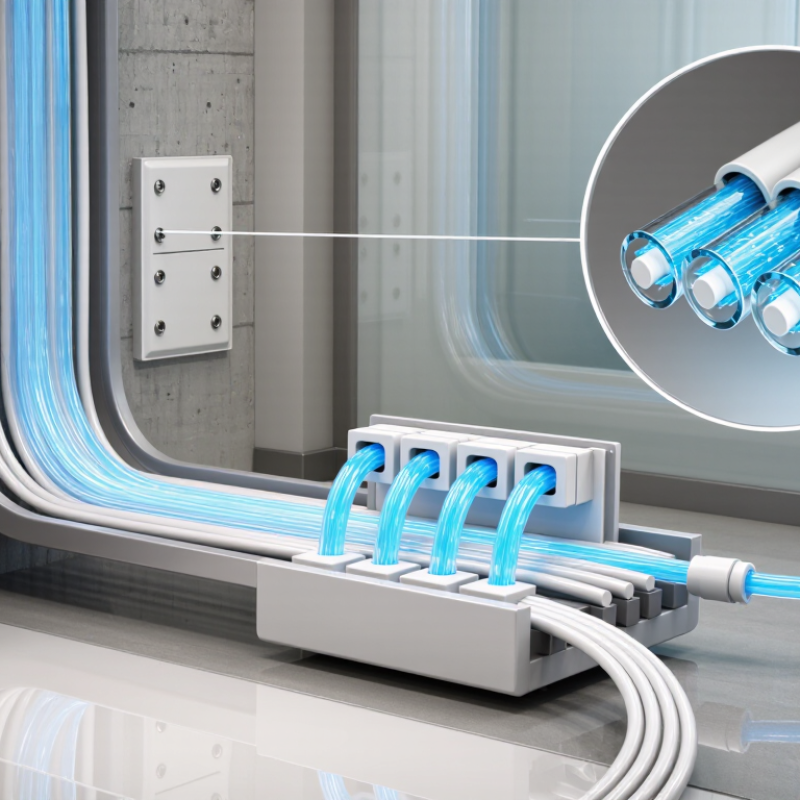
Why Do Fiber Optic Cables Last So Long?

Silica Glass and ITU-T G.652: Attenuation ≤0.35 dB/km at 1310 nm

Why Do Fiber Optic Cables Last So Long?

Silica glass is chemically stable and does not rust like metal. In a well-made fiber, a highly pure glass core guides light with few internal defects. ITU-T G.652 specifies fiber characteristics for widely used single-mode optical fibers. A commonly cited attenuation limit is 0.35 dB/km at 1310 nm. That means a 10-kilometer fiber span could lose up to 3.5 dB in the fiber itself, before connector and splice losses. The figure is a specification, not a guarantee for every installed cable. Real results depend on the fiber type, installation, and test conditions.

Tips: Keep connector endfaces clean, avoid tight bends, and check links with an optical power meter. A dirty endface can add loss. So can a stressed splice. Record measurements over time; small changes may reveal a problem before service drops.

The glass can last for decades, but the whole cable system is less invincible. Moisture, crushing, repeated movement, and damaged protective sheathing can shorten its useful life. Outdoor cables rely on jackets and strength members to shield delicate fibers from those stresses. These parts may age sooner than the glass. That distinction is easy to overlook. Even a low-attenuation fiber needs careful handling and sound maintenance.

Cable Jackets and IEC 60794: Protection from Moisture, Crush, and Tension

A fiber’s glass core may resist corrosion, but its jacket faces mud, standing water, sharp gravel, and cable-pulling forces. IEC 60794-1-21:2015 sets out mechanical test methods, including tensile and crush tests. These checks help reveal whether a cable’s construction can withstand installation stress without unacceptable damage. Small details matter.

The outer sheath blocks moisture and shields the core and strength members from abrasion. For water exposure, IEC 60794-1-22:2017 describes environmental test methods, including water-penetration testing. The standard defines how to test; product specifications set the acceptance limits. That distinction matters. A thick jacket alone does not prove a cable will survive a flooded duct or a tight bend.

A practical inspection looks for cuts, flattened sections, and jacket cracking near clamps or entry points. Still, a laboratory test cannot reproduce every rocky trench or rushed pull. IEC 60794 offers repeatable methods, not a promise of a fixed service life. Engineers should match the cable’s rated tensile load and crush resistance to the route, then inspect exposed sections after installation. One weak spot can invite water in.

Low Signal Loss: G.652 Fiber Attenuation ≤0.22 dB/km at 1550 nm

Fiber optic cables can remain useful for decades because glass carries light with little energy loss and does not corrode like metal conductors. At 1550 nm, a low-loss G.652 cable specification may set attenuation at ≤0.22 dB/km. That means a 10-kilometer span loses about 2.2 dB in the fiber itself, before connector and splice losses. ITU-T Recommendation G.652.D sets a commonly cited maximum of 0.25 dB/km at 1550 nm, so 0.22 represents a tighter target, not a universal guarantee. Small difference. It matters over long routes.

Low attenuation reduces the optical power lost along a route, but it does not explain cable life by itself. The glass is protected by coatings, strength members, and an outer jacket; poor installation, tight bends, moisture, or damaged joints can still cause trouble. IEC 60793-1-40 describes measurement methods for optical-fiber attenuation, helping make reported values comparable. Still, a lab reading cannot promise a service lifetime. That is an easy detail to overlook.

Tips: Check the test wavelength and whether figures include connectors. Keep bends within the cable’s specified limits, and inspect joints during maintenance. A clean 1550 nm measurement is useful, but field conditions can be less tidy.

IEC 60794-1-2 Tests: Mechanical and Environmental Aging Methods

Why Do Fiber Optic Cables Last So Long?

IEC 60794-1-2 Tests: Mechanical and Environmental Aging Methods

Fiber-optic cable longevity is tested, not assumed. IEC 60794-1-2 describes procedures for checking how cable designs respond to mechanical and environmental stresses. The selected tests depend on the cable’s construction and intended installation. A buried cable and an indoor cable face different risks.

Mechanical tests recreate stresses that can occur during handling or service. Tensile testing pulls a sample while technicians monitor elongation and optical attenuation. Crush testing applies pressure; impact testing checks damage from a sudden blow.

Bending and torsion procedures reveal whether fibers remain stable when the cable curves or twists. Small changes matter. A cable can look intact while its optical performance shifts.

Environmental procedures can include temperature cycling or water penetration, depending on the cable specification. Samples may be conditioned and measured before, during, or after exposure. These tests help engineers compare designs and spot weak points, but cannot predict every installation. Field conditions are messy. Poor support or repeated pulling can still shorten service life. Laboratory cycles also simplify years of real-world change, so test results are most useful alongside careful installation records and inspections.

25-Year Telecom Planning Horizons: How Installation Shapes Cable Service Life

Telecom networks are often planned across a 25-year horizon, but that figure is a planning window, not a cable warranty. Glass fibers can carry signals for decades when protected from excessive strain, moisture, and repeated disturbance. The installation sets much of that protection in place.

A cable pulled too hard may suffer damage that is difficult to spot immediately. Tight bends can create microbends, which weaken signal performance over time. Good crews check pulling tension, respect the cable’s bend radius, and seal splice closures against water. Small details matter. A clean duct route also makes later repairs less disruptive.

Buried routes need accurate maps and clear records of joints, depths, and access points. A missing record can turn a minor fault into hours of digging. In aerial installations, wind, ice, and shifting supports add different stresses. These conditions vary, so a lifespan estimate should include local soil, climate, and maintenance plans.

The 25-year horizon can still be useful. It helps planners compare installation costs with future access needs and replacement risks. Yet it can look tidier on paper than in the field. Even careful installation cannot prevent every accident, construction change, or overlooked defect. Regular testing can reveal gradual signal loss before customers notice it.

FAQS

Why can fiber-optic cables last for decades?

Silica glass carries light with little loss and does not rust like metal. Protective coatings and jackets shield the delicate fibers. Not forever.

What does attenuation of 0.35 dB/km at 1310 nm mean?

It means a 10-kilometer fiber span could lose up to 3.5 dB within the fiber. Connectors and splices add separate losses. The figure is a specification, not a promise for every installed cable.

What does a 0.22 dB/km figure at 1550 nm tell me?

A 10-kilometer span would lose about 2.2 dB in the fiber itself. Some specifications set this tighter target; it is not a universal guarantee. Check the test wavelength and measurement conditions.

What can shorten a cable’s useful life?

Moisture, crushing, tight bends, and repeated movement can damage a cable. A torn outer jacket may expose its protective layers. The glass may remain sound while those parts age first.

How do technicians test cable durability?

Tests can include pulling, crushing, impact, bending, and twisting samples. Technicians watch for physical damage and changes in optical attenuation. A cable can look fine but perform differently.

Can laboratory tests predict exactly how long a cable will last?

No. Environmental tests may include temperature cycling or water exposure, depending on the cable design. They help compare samples, but real installations are less tidy. That limitation matters.

What simple checks can help maintain a fiber link?

Keep connector endfaces clean, avoid bends tighter than specified, and inspect joints. An optical power meter can track link performance. Record readings over time; small changes are easy to miss.

Conclusion

Fiber optic cables can last for decades because their core is made from stable silica glass, which carries light with very little signal loss. For standard G.652 fiber, attenuation is no more than 0.35 dB/km at 1310 nm and can be as low as 0.22 dB/km at 1550 nm. This low loss helps networks maintain reliable performance over long distances, while the glass itself resists many forms of gradual material degradation.

The cable’s service life also depends on its protective jacket and installation conditions. Proper construction helps shield the fiber from moisture, crushing forces, and tension. Mechanical and environmental aging tests described in IEC 60794-1-2 assess how cables withstand these stresses. So, how long does fiber optic cable last? In well-designed and carefully installed telecom systems, it can support planning horizons of 25 years or more, though actual longevity depends on the environment and the quality of installation.

Mason

Mason

Mason is a seasoned marketing professional with a deep expertise in the company's offerings and a passion for driving brand awareness. With a strong background in digital marketing strategies, he has an innate ability to connect with diverse audiences and effectively communicate product benefits.......