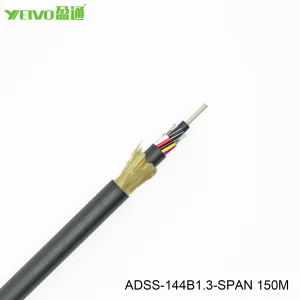
Engineered to withstand the specific alpine wind loads, ice build-ups, and electromagnetic environments of the Geneva canton and metropolitan grids.
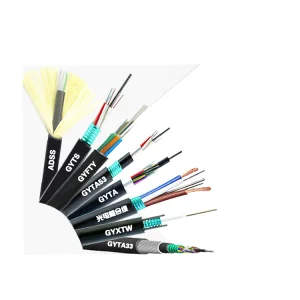
A deep dive into how high-performance all-dielectric self-supporting fiber optic solutions are reshaping communications and utility infrastructure in French-speaking Switzerland.
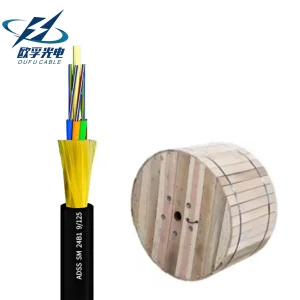
As a global hub for science, finance, and international collaboration, the city and canton of Geneva are executing one of Europe's most ambitious metropolitan digitalization and decarbonization plans. Initiatives like "Smart Geneva," alongside the modernization projects led by local utility operators such as the Services Industriels de Genève (SIG), require a robust, EMI-immune communications backbone. ADSS (All-Dielectric Self-Supporting) optical fiber cables have emerged as the standard for integrating modern optical communications directly into high-voltage electrical distribution networks and public transit catenaries without costly right-of-way excavations.
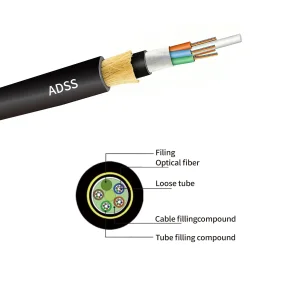
In Geneva's unique microclimate, characterized by the damp air surrounding Lake Geneva and severe alpine winds coming off the Jura and Alps, overhead telecommunication lines face substantial environmental stress. Heavy winter ice loading and strong seasonal winds require aerial fiber cables to feature precise engineering margins. Unlike traditional copper or steel-armored cables, ADSS cable uses only dielectric materials. By removing metals from the cable structure, operators completely mitigate the risk of lightning strikes, high-voltage induction, and the electrical tracking damage common on power lines up to 400 kV.
"For modern utilities in the Canton of Geneva, combining high-voltage power transmission lines with non-conductive ADSS optical fiber is the fastest and most cost-effective path to building the smart distribution grid of tomorrow."
How global power transmission networks rely on dielectric fiber cables to integrate real-time grid monitoring, distribution automation, and renewable energy assets.
Across the globe, the shift toward clean energy requires power grids to run near their physical limits. Managing fluctuating wind and solar power requires real-time monitoring and automation. ADSS cables installed on power transmission structures provide the high-speed data path needed for SCADA systems, synchrophasor measurements, and distribution management systems (DMS).
Optical Ground Wire (OPGW) remains a standard for new high-voltage lines, but retrofitting existing power grids with OPGW requires shutting down the line. This can cost utilities hundreds of thousands of dollars in lost service. ADSS offers a distinct advantage: because it is entirely non-metallic, it can be installed safely near live high-voltage conductors. This allows utilities to install fiber lines without shutting down power to customers.
High-performance material science configured to withstand mechanical stress, tracking erosion, and severe environmental loads.
For installations on high-voltage lines where space potentials exceed 12kV, specialized track-resistant (AT) outer jackets prevent dry-band arcing and electrical tracking damage.
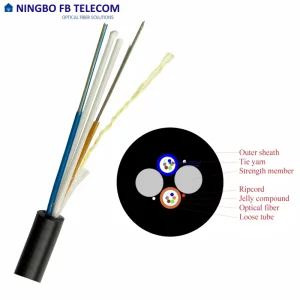
Utilizing high-modulus aramid yarns (DuPont Kevlar or equivalent) to provide the tensile strength required to control sag and withstand extreme wind and ice loads.
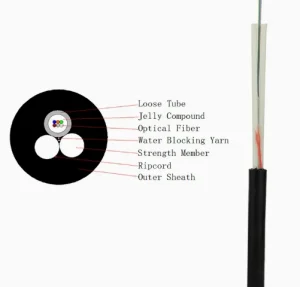
Dry water-blocking core materials prevent longitudinal water ingress along the cable, maintaining optical stability even if the outer jacket is damaged.
As standard single-mode optical fiber technology evolves, manufacturers are shifting from traditional ITU-T G.652.D fibers to advanced bend-insensitive ITU-T G.657.A1 and G.657.A2 standards. This shift is critical for high-density metropolitan distribution networks. G.657 fiber reduces macrobending losses in compact splice trays and optical termination points, ensuring reliable transmission rates of 100G, 400G, and beyond.
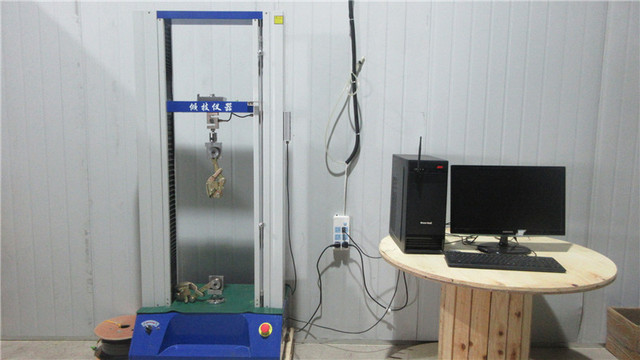
Additionally, modern ADSS cable manufacturing focuses heavily on structural testing. Standard testing practices follow the IEEE 1222 standard, which regulates the design and testing of all-dielectric self-supporting fiber optic cables. Cable designs are subjected to rigorous testing, including water penetration, aging, temperature cycling, sag-tension verification, and Aeolian vibration testing.
Real-world deployment scenarios designed for Swiss engineering standards and environmental conditions.
Connecting generation facilities (such as the Verbois dam or local thermal waste-to-energy plants) with urban distribution hubs requires high-bandwidth data transmission. ADSS cables are installed below the phase conductors on 132kV and 220kV transmission lines. This design avoids electric field coupling and uses tracking-resistant materials to ensure reliable operation despite constant exposure to high-voltage electric fields.
Geneva is surrounded on three sides by France, making cross-border data links essential. Overhead ADSS fiber lines provide reliable, high-capacity interconnects that link Swiss data hubs with French networks. These routes must cross challenging mountainous terrain, requiring ADSS cables with reinforced aramid yarn structures that can handle spans of up to 400 meters.
Geneva's public transportation network (TPG) relies heavily on overhead tram and trolleybus lines. ADSS cables can be safely mounted to these catenary support structures to transmit telemetry data, video surveillance feeds, and real-time passenger information. The non-conductive design prevents current leakage and protects delicate equipment from electrical noise.
Strict compliance with European standards ensures reliable performance on municipal infrastructure.
Our manufacturing and exporting processes for Geneva comply with all European and Swiss telecommunication directives. Swiss infrastructure requires high-quality products that conform to strict regulatory frameworks, including:
Through our established export network, we offer DDP (Delivered Duty Paid) shipping to Geneva and nearby logistics hubs. Every shipment is accompanied by complete test reports, including optical time-domain reflectometer (OTDR) profiles, tensile load certifications, and tracking resistance compliance certificates, ensuring a smooth integration process.
A Trusted Global Partner in Fiber Optic Manufacturing and Engineered Connectivity Solutions.
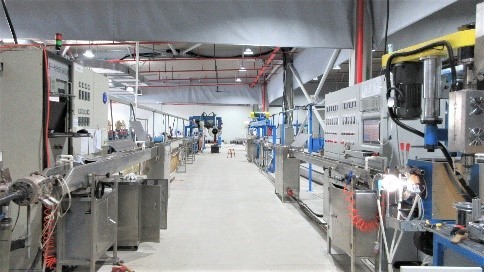
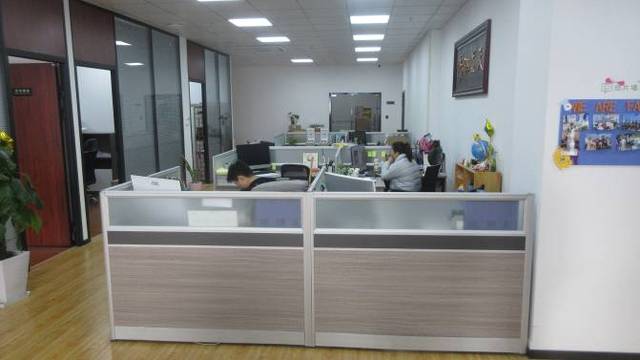
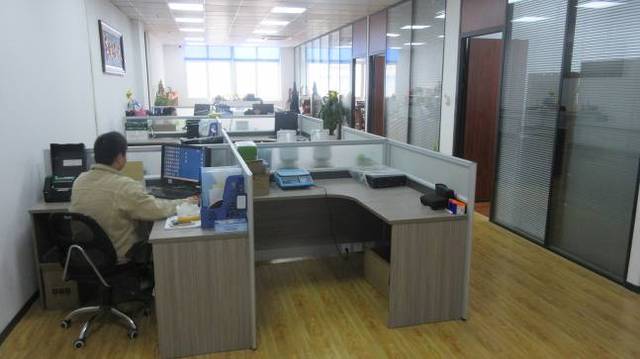
Dongguan XT Cabled Co., Ltd. is a professional manufacturer specializing in fiber optic cables and optical connectivity solutions for industrial, telecommunications, and data center applications. Established in 2012, the company is located in Dongguan, Guangdong Province, one of China's leading manufacturing hubs. With a production facility covering over 12,000 square meters and a team of more than 180 employees, XT Cabled is committed to delivering reliable, high-performance fiber optic products to customers worldwide.
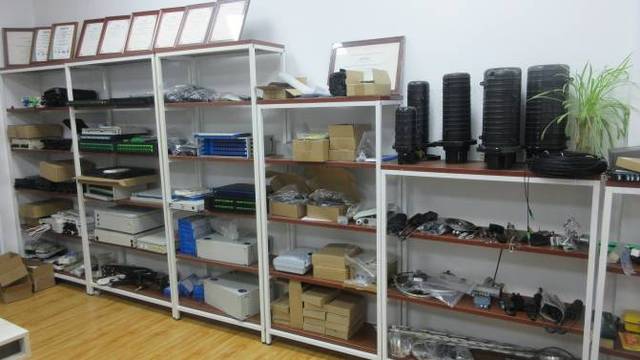
The company's product portfolio includes single-mode fiber optic cables, multi-mode fiber optic cables, FTTH cables, armored fiber optic cables, outdoor fiber cables, indoor fiber cables, data center cabling solutions, industrial optical cables, and customized optical connectivity products. These solutions are widely used in telecommunications networks, broadband infrastructure, smart buildings, industrial automation systems, cloud computing facilities, and large-scale data centers.
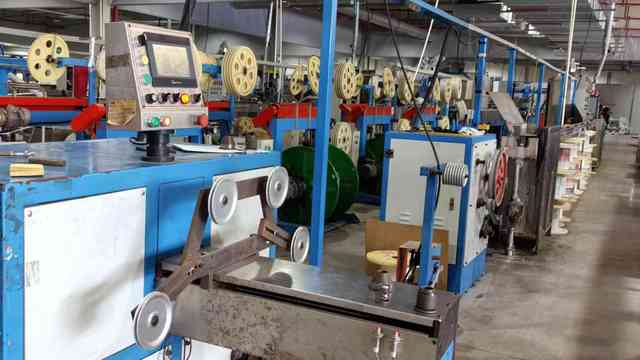
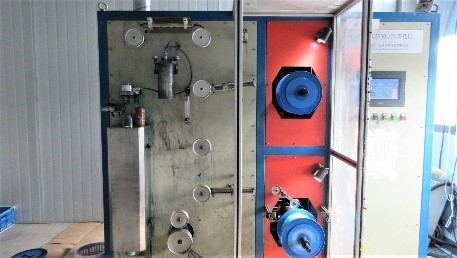
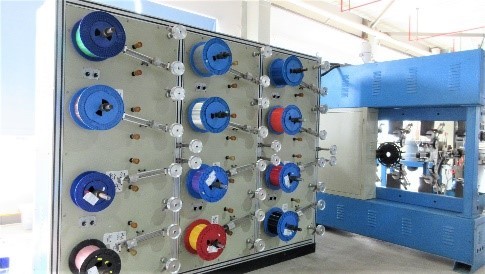
XT Cabled operates advanced production lines and testing laboratories equipped with modern inspection instruments to ensure product consistency and compliance with international quality standards. The company follows strict quality management procedures throughout material sourcing, manufacturing, testing, and delivery processes. Its products are manufactured in accordance with recognized industry standards and are supplied to customers across North America, Europe, Southeast Asia, the Middle East, and other global markets.
In addition to standard products, XT Cabled provides OEM and ODM manufacturing services, supporting customers with customized cable structures, specifications, packaging, and branding requirements. Through continuous investment in technology, manufacturing efficiency, and customer service, Dongguan XT Cabled Co., Ltd. strives to be a trusted partner for global optical communication and network infrastructure projects.
Browse our complete range of aerial, duct, and armored fiber cables engineered to support international telecommunication standards.
Key considerations for deploying ADSS optical fiber cables on high-voltage and municipal networks.
 XT Cabled