Premium physical-layer optical components engineered to meet the requirements of DWDM, CWDM, and FTTH networks globally.
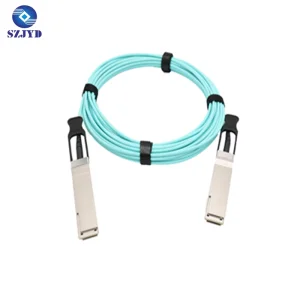
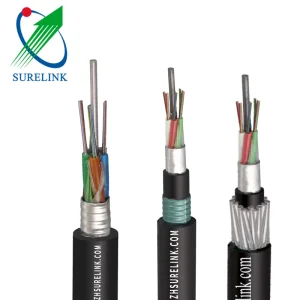
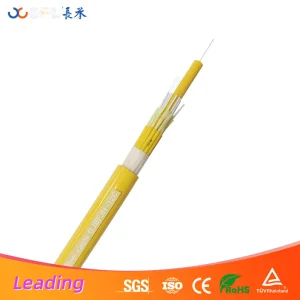
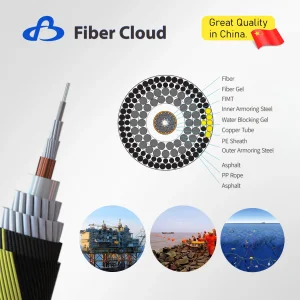
A technical white paper on scaling transport networks using wavelength division multiplexing (WDM) and optimized optical fiber pathways.
Modern telecommunications demand exponential increases in bandwidth without laying new dark fiber. This is where Fiber Optic Multiplexers step in. By splitting optical signals into discrete wavelengths (channels) across the optical spectrum (e.g., C-band, L-band), Wavelength Division Multiplexing (WDM) enables multiple data streams to co-exist on a single fiber core. From Coarse WDM (CWDM) with wide channel spacing (20nm) to Dense WDM (DWDM) operating at grid spacings of 100GHz or 50GHz, the integration of physical glass fibers and precision filtering components is key to minimal transmission loss.
No multiplexer can perform without high-purity glass infrastructure. High polarization mode dispersion (PMD) or micro-bending in single-mode cables will rapidly degrade signals at high frequencies. Utilizing premium ITU-T G.652.D and bend-insensitive G.657.A1 fiber cores ensures that optical paths have low insertion loss (<0.35 dB/km at 1310nm and <0.20 dB/km at 1550nm). This technical match guarantees that multiplexing equipment can span up to 100km without the need for active inline erbium-doped fiber amplifiers (EDFAs).
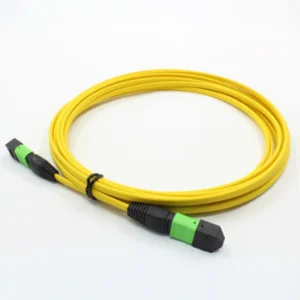
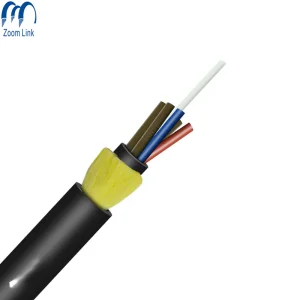
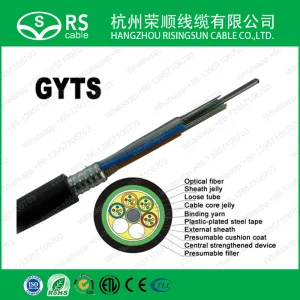
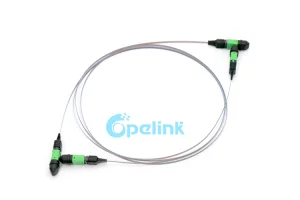
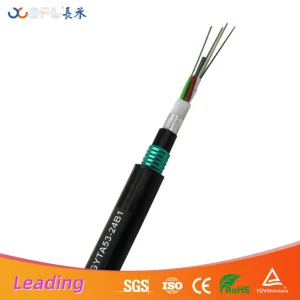
Global procurement directors and optical network engineers look for specific performance profiles when vetting Chinese optical component factories. First and foremost is the integration of connectors. High-density patch panels using MPO/MTP ribbon interfaces must feature premium UPC (Ultra Physical Contact) or APC (Angled Physical Contact) ferrule polishes to minimize back-reflection (Return Loss > 60dB for APC). Second, environmental resilience is essential: cables deployed alongside active multiplexer nodes in metropolitan rings must survive temperature variances between -40°C and +85°C. For aerial applications, self-supporting ADSS (All-Dielectric Self-Supporting) structures prevent electromagnetically induced attenuation, while armored designs (GYTA53, GYTA33) safeguard deep underwater or direct-buried channels from rodent damage and moisture ingress.
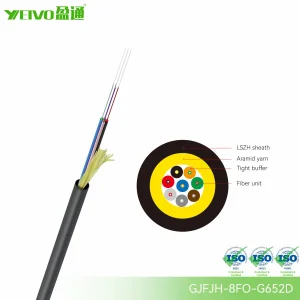
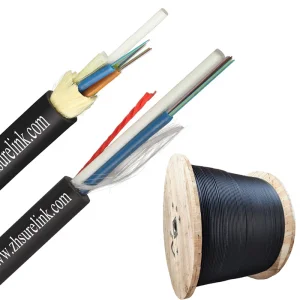
Whether configuring a campus network, a metropolitan optical ring, or a hyperscale cloud facility, selecting the correct cable architecture is key:
A trusted partner for global optical communication and network infrastructure projects since 2012.
Dongguan XT Cabled Co., Ltd. is a professional manufacturer specializing in fiber optic cables and optical connectivity solutions for industrial, telecommunications, and data center applications. Established in 2012, the company is located in Dongguan, Guangdong Province, one of China's leading manufacturing hubs. With a production facility covering over 12,000 square meters and a team of more than 180 employees, XT Cabled is committed to delivering reliable, high-performance fiber optic products to customers worldwide.
The company's product portfolio includes single-mode fiber optic cables, multi-mode fiber optic cables, FTTH cables, armored fiber optic cables, outdoor fiber cables, indoor fiber cables, data center cabling solutions, industrial optical cables, and customized optical connectivity products. These solutions are widely used in telecommunications networks, broadband infrastructure, smart buildings, industrial automation systems, cloud computing facilities, and large-scale data centers.
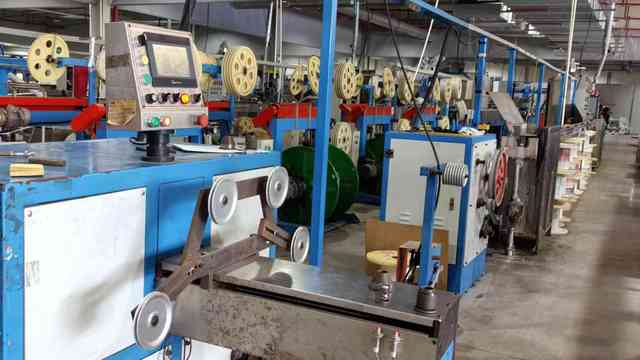
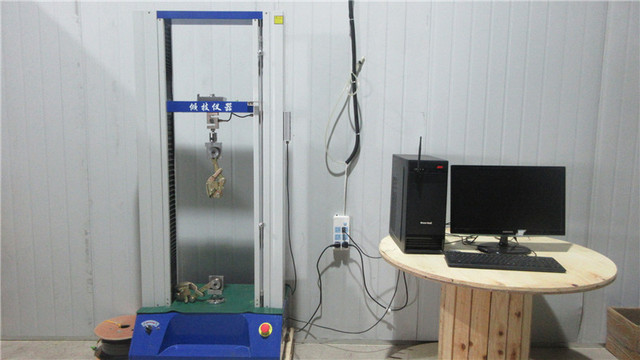
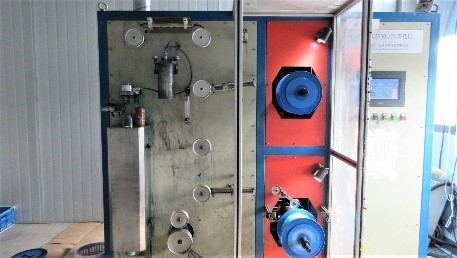
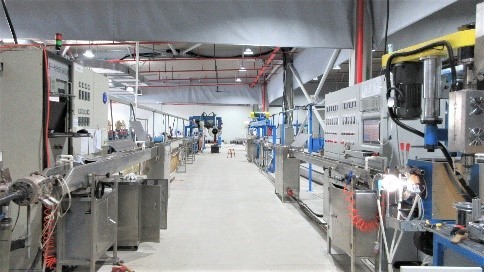
XT Cabled operates advanced production lines and testing laboratories equipped with modern inspection instruments to ensure product consistency and compliance with international quality standards. The company follows strict quality management procedures throughout material sourcing, manufacturing, testing, and delivery processes. Its products are manufactured in accordance with recognized industry standards and are supplied to customers across North America, Europe, Southeast Asia, the Middle East, and other global markets.
In addition to standard products, XT Cabled provides OEM and ODM manufacturing services, supporting customers with customized cable structures, specifications, packaging, and branding requirements. Through continuous investment in technology, manufacturing efficiency, and customer service, Dongguan XT Cabled Co., Ltd. strives to be a trusted partner for global optical communication and network infrastructure projects.
Exploring the future of multi-channel transmission, silicon photonics, and ultra-high-density networks.
As transmission speeds step beyond 400G toward 800G and 1.6T, physical-layer optical cabling architectures are undergoing key shifts. High-density installations require technologies like Silicon Photonics and Coherent Optical Systems. These systems require fiber cables with lower chromatic dispersion and attenuation coefficients.
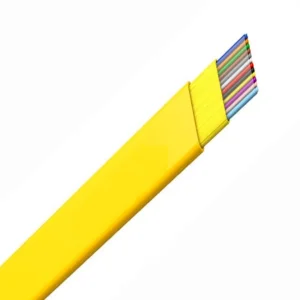
The industry is moving away from traditional loose-tube configurations in data centers toward rollable ribbon fibers and ultra-compact micro-cables. This allows operators to quadruple their fiber counts within the same duct pathways. Furthermore, the combination of DWDM multiplexers with space division multiplexing (SDM) via multicore fibers is no longer just a laboratory experiment; it is the blueprint for next-generation transoceanic links.
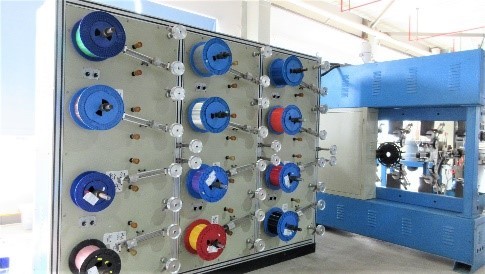
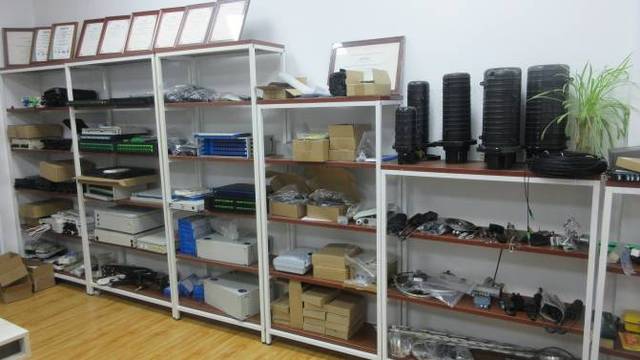
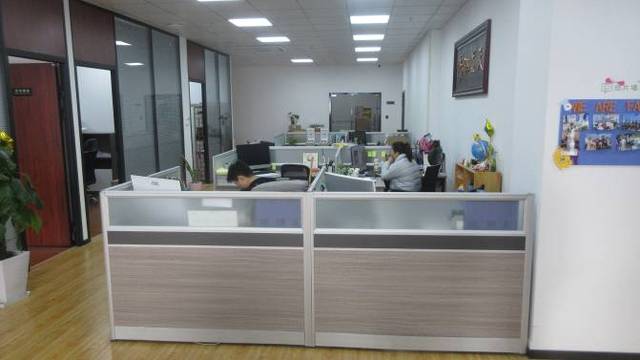
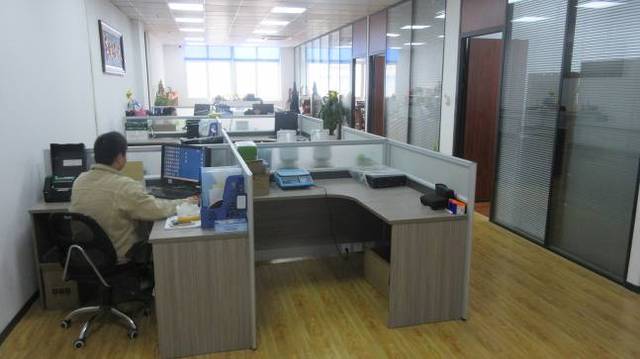
XT Cabled runs a strict, vertically integrated manufacturing operation. Here is a look inside our modern facility in Dongguan, Guangdong Province:
Addressing the complex engineering queries of network architects and procurement specialists.
The core glass composition dictates the attenuation and dispersion properties across WDM bands. For example, ITU-T G.652.D fibers eliminate the water-peak attenuation around 1383nm, opening up the E-band for CWDM multiplexers. For DWDM operating in the C-band (1530nm - 1565nm), minimizing attenuation to <0.20 dB/km is critical to maximizing distance margins between nodes.
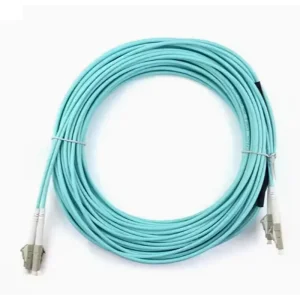
Typically, passive Mux/Demux filters add 1.5 dB to 3.0 dB of insertion loss per end. In a point-to-point link, the physical fiber and patch connections must stay well within the remaining optical power budget. High-quality single-mode patches with insertion losses <0.15 dB are recommended to minimize degradation across the entire system.
PDL measures the difference in transmission loss across different polarization states of the light wave. High PDL can cause unpredictable optical power fluctuations, leading to bit-error-rate (BER) spikes. Quality multiplexers and polarization-maintaining patch cords ensure PDL is kept below 0.1 dB.
Yes, Dongguan XT Cabled Co., Ltd. provides comprehensive OEM and ODM manufacturing services. We can customize outer jacket compounds (LSZH, PVC, PE, PUR), steel armoring formats (corrugated tape, wire wrapping), fiber counts (ranging from 1 to 144 cores), and connector types (LC, SC, FC, ST, MPO/MTP) to suit specific target deployments.
Premium cables, assemblies, and custom jumpers engineered for global telecom operators and infrastructure systems.
 XT Cabled