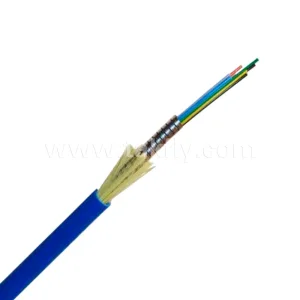
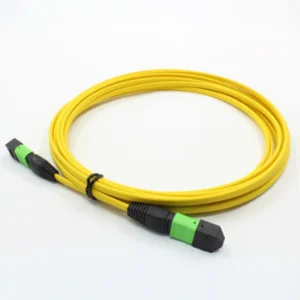
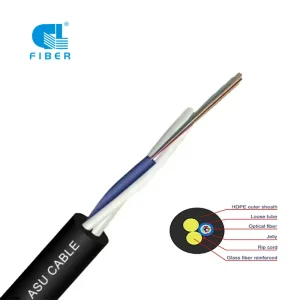
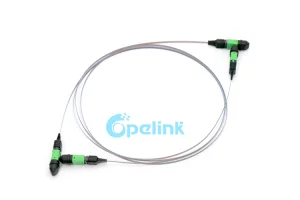
Engineered to exact tolerances and certified under rigorous laboratory testing standards
Why precise optical testing equipment defines the reliability of international cabling infrastructure
Within high-density telecommunication systems, the performance of physical fiber networks is bound to the precision of the manufacturing process. Optical fibers, while capable of carrying terabytes of data over thousands of kilometers, are extremely vulnerable to micro-bends, dispersion, insertion losses (IL), and return losses (RL). For global network operators, hyper-scale cloud data centers, and telecommunication infrastructure builders, procuring fiber optic elements demands verification from advanced diagnostic and testing equipment.
Optical Time Domain Reflectometers (OTDRs), Interferometers, optical light sources, and automated inspection microscopes are no longer just troubleshooting tools; they are integral parts of the factory floor. Chinese manufacturers have vertically integrated these technologies, ensuring that every drum of fiber optic cable meets international standards, including Telcordia GR-326-CORE and IEC 60793/60794. By incorporating real-time diagnostic testing within the extrusion and termination lines, modern factories can guarantee stable optical transport layers.
"A reduction of 0.05dB in connection loss translates to a 10% increase in optical link margin budget for long-haul networks."
Combining industrial scale, rapid customization, and complete supply chain integration
From raw silica purification and fiber preform drawing to connector assembly and optical metrology instrumentation, China's local clusters (specifically in Guangdong and Zhejiang) house the entire manufacturing lifecycle under a single logistical footprint. This reduces production lead times and keeps component alignment costs exceptionally low.
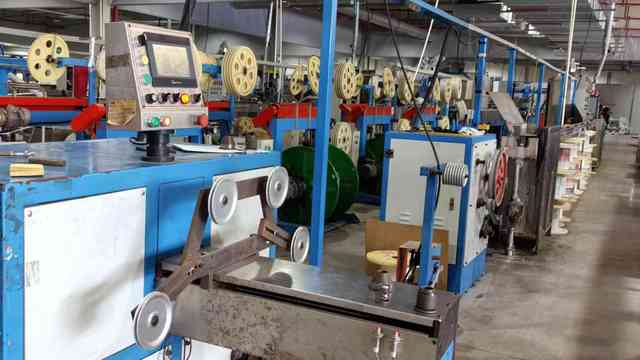
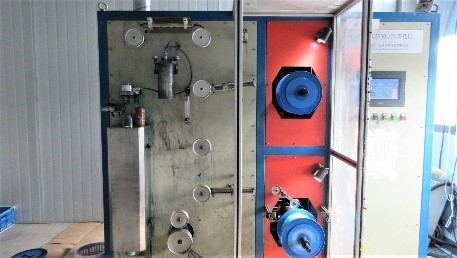
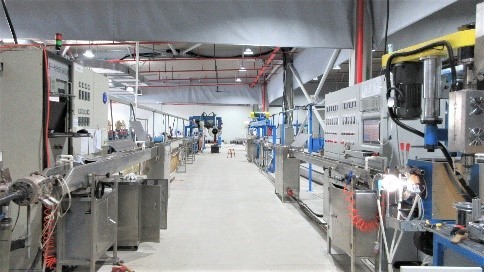
Leading Chinese factories integrate advanced optical testing equipment directly within the automated production lines. Robotic end-face inspection, automated fiber geometry testing, and dynamic laser diameter monitors detect and isolate micro-imperfections before final cabling, avoiding defective product shipment.
Leading manufacturers maintain ISO 9001, ISO 14001, and UL certifications, implementing trace records for all raw components. Every fiber optic patch cord or trunk cable ships with detailed optical inspection reports detailing IL and RL at multiple frequencies, assuring buyers of long-term field reliability.
Targeted solutions for data centers, harsh environments, smart factories, and regional networks
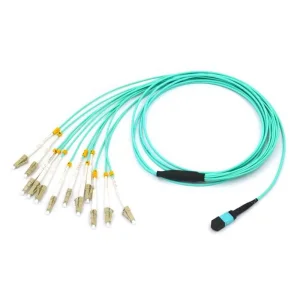
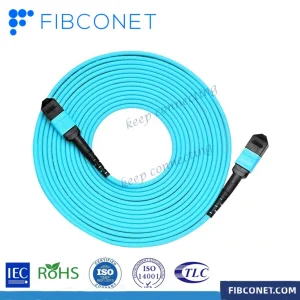
Modern cloud facilities rely on dense cabling systems such as high-density MTP/MPO ribbon cables and distribution armored patches to link compute units. With transmission speeds shifting from 400G to 800G and 1.6T, connection loss budgets have shrunk. Factories implement multi-fiber array testing to analyze the insertion loss of each individual fiber line, protecting key data highways from signal degredation.
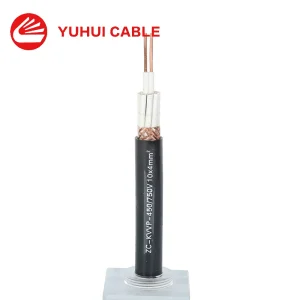
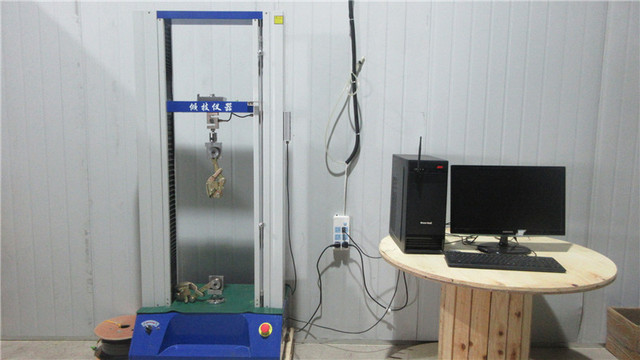
Industrial settings contain electromagnetic interference (EMI) and physical vibrations. Integrated data-and-power control cables with fiber elements supply both energy and noise-free communication lines to IoT devices. Because cables in these environments must withstand oil exposure, flexing, and temperature fluctuations, factories utilize localized mechanical testing to measure tensile limits and jacket wear resistance.
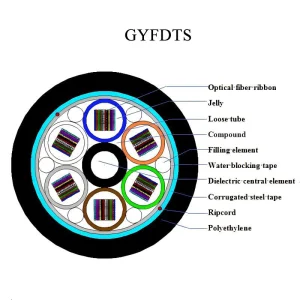
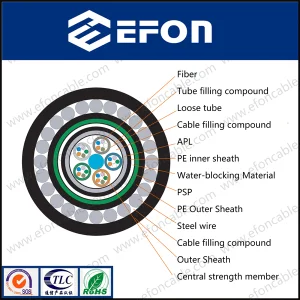
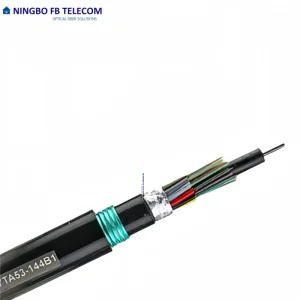
Undersea and underground backhauls face harsh stresses. Heavy protection armored cables, like GYTA53 with steel tape reinforcement or double-armored variations, are tested for water ingress, hydrostatic pressure resistance, and lateral crush capacity. Advanced OTDR diagnostic equipment scans the finished spool to guarantee zero micro-fractures in the glass core before shipping.
Fiber-to-the-Home (FTTH) expansion relies on cost-effective, easily deployed drop cables and self-supporting ADSS aerial structures. Using modern optical field testers, contractors inspect splices and terminations on-site. Factories calibrate drop cables to verify bend-insensitivity (G.657.A1/A2 specifications), enabling reliable operation in tight wall bends and urban conditions.
The standard verification checklist for international fiber infrastructure buyers
Connectors must show apex offset under 50 micrometers, fiber roughness below 50 nm, and fiber height relative to the ferrule between -100nm to +50nm. These measurements require factory interferometric analysis to maintain connector durability over hundreds of mating cycles.
Cables intended for outdoor use must undergo environmental testing in specialized chambers to confirm operational range (-40°C to +70°C). Tensile, crush, impact, and twist tests verify physical longevity against long-term environmental fatigue.
Reliable OEM partners provide digital test records for every production batch. These records trace raw material lots, outer diameter consistency measurements, and OTDR/insertion loss test data down to individual connector serial numbers.
Ensure products hold valid certifications from recognized organizations like TÜV, SGS, UL, or CPR (Construction Products Regulation) compliance for fire resistance and smoke emission (LSZH) in indoor environments.
A trusted source for custom fiber optic cables and advanced optical connectivity solutions
Dongguan XT Cabled Co., Ltd. is a professional manufacturer specializing in fiber optic cables and optical connectivity solutions for industrial, telecommunications, and data center applications. Established in 2012, the company is located in Dongguan, Guangdong Province, one of China's leading manufacturing hubs. With a production facility covering over 12,000 square meters and a team of more than 180 employees, XT Cabled is committed to delivering reliable, high-performance fiber optic products to customers worldwide.
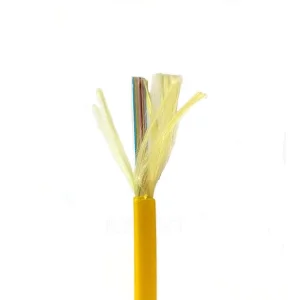
The company's product portfolio includes single-mode fiber optic cables, multi-mode fiber optic cables, FTTH cables, armored fiber optic cables, outdoor fiber cables, indoor fiber cables, data center cabling solutions, industrial optical cables, and customized optical connectivity products. These solutions are widely used in telecommunications networks, broadband infrastructure, smart buildings, industrial automation systems, cloud computing facilities, and large-scale data centers.
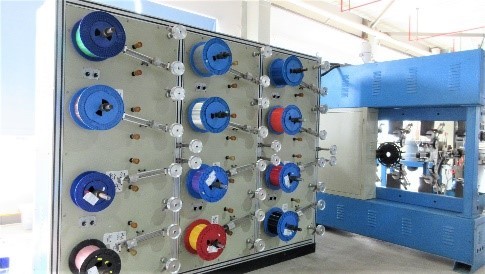
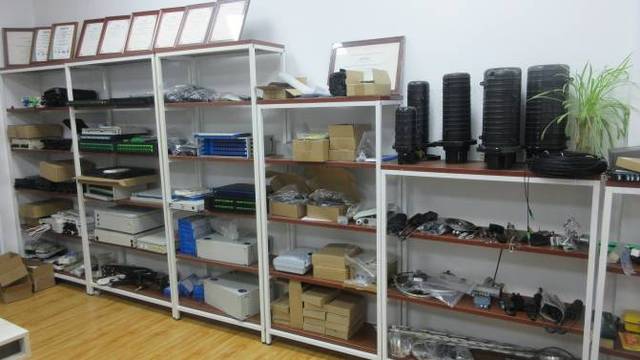
XT Cabled operates advanced production lines and testing laboratories equipped with modern inspection instruments to ensure product consistency and compliance with international quality standards. The company follows strict quality management procedures throughout material sourcing, manufacturing, testing, and delivery processes. Its products are manufactured in accordance with recognized industry standards and are supplied to customers across North America, Europe, Southeast Asia, the Middle East, and other global markets.
In addition to standard products, XT Cabled provides OEM and ODM manufacturing services, supporting customers with customized cable structures, specifications, packaging, and branding requirements. Through continuous investment in technology, manufacturing efficiency, and customer service, Dongguan XT Cabled Co., Ltd. strives to be a trusted partner for global optical communication and network infrastructure projects.
The transition toward automated testing, AI-assisted metrics, and ultra-density connectivity
High-density links like MPO-24 and MPO-32 require automated, simultaneous testing channels. Modern test benches complete testing of insertion loss across all fibers in seconds, cutting inspection bottle-necks.
Modern software uses neural networks to check fiber end-faces. These algorithms spot, categorize, and measure scratches, dirt, and pits, removing technician subjectivity from QA checks.
Field crews rely on all-in-one platforms combining OTDR, optical power meters, light sources, and fiber scopes. These cloud-connected tools upload field test logs straight to remote QA servers.
As silicon photonics merge with ASICs (Co-Packaged Optics), connection alignment tolerances drop below 1 micron. Testing now uses active alignment sub-micron automation to control loss margins.
High-integrity connectivity components designed for heavy enterprise and industrial workloads
Addressing the common design, metrology, and manufacturing inquiries of network engineers
 XT Cabled