Pre-terminated fiber assemblies designed to ensure reliable regional connectivity, high thermal tolerance, and low latency data routing.
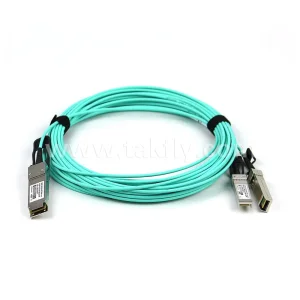
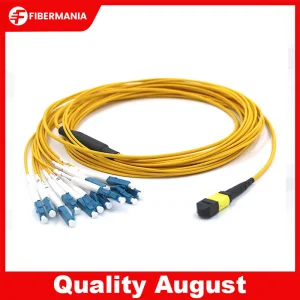
Modern telecommunication demands necessitate fiber optical infrastructures that combine sheer structural resilience with high-density data transmission parameters. For regions bordering or serving the East Asian corridor—including localized zones, specialized industrial complexes, and cross-border gateways near North Korea—the installation of high-capacity breakout fiber systems remains critical. Breakout fiber cables, characterized by their individually buffered fibers protected by dedicated aramid strength members and outer jackets, serve as the baseline physical layer supporting crucial connectivity networks, administrative backbones, and regional communication centers.
In highly specialized communication systems, network engineers prefer breakout fiber architectures over standard distribution or loose-tube configurations due to their unique modularity. Each sub-channel can be routed independently without the necessity of splice trays or complex fan-out kits, limiting insertion loss at critical connection points. In administrative hubs and special development areas, this modular configuration mitigates signal degradation, simplifies maintenance, and provides robust performance in environments prone to high environmental stress and low maintenance access.
Connecting regional networks across borders—such as the Sinuiju-Dandong links, the Rason Special Economic Zone (SEZ), and dedicated administrative intranet structures—requires fiber optics that can endure distinct operational challenges. These environments demand cables that exhibit high resistance to radical temperature fluctuations, physical pulling forces during underground duct installation, and long-term moisture ingress. High-density breakouts like 8-core, 12-core, and 24-core single-mode configurations (G.652.D and bend-insensitive G.657.A1) provide the necessary physical security and bandwidth overhead to handle mission-critical networks.
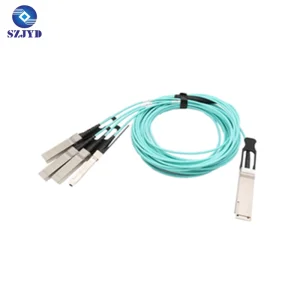
Additionally, optical networks in these areas must interface seamlessly with legacy infrastructure while enabling future migration path upgrades to 10G SFP+, 40G QSFP+, and 100G QSFP28 active optical links. Given the reliance on key transit connections, the quality of fiber assemblies directly influences regional data uptime, signal integrity, and the physical footprint of central switching cabinets.
Engineered for low-loss transitions between high-density backbone trunks and optical distribution frames.
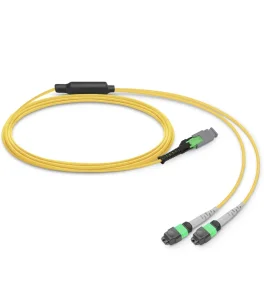
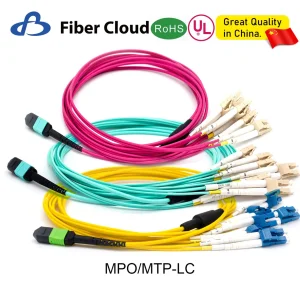
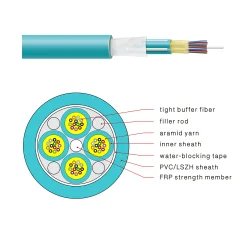
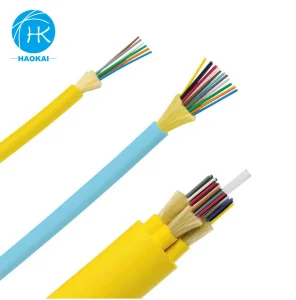
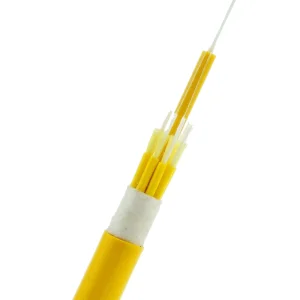
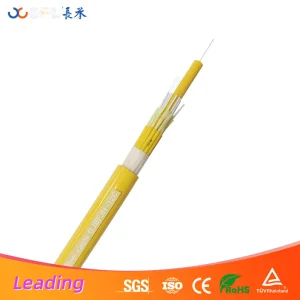
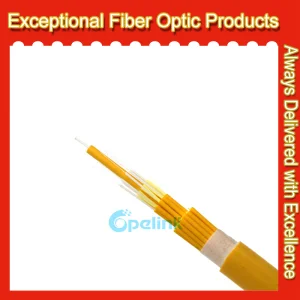
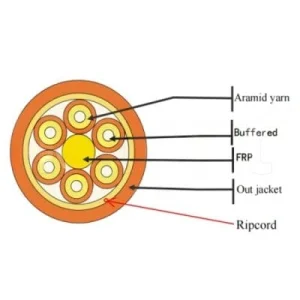
A true industrial breakout fiber cable represents a multi-tiered defense system protecting critical signal lines. Unlike standard distribution cables where buffered fibers share a single, unified jacket, a breakout cable treats every single optical fiber as an independent cable unit. For instance, in a 12-core indoor breakout configuration (such as our Gjbfjvh series), each individual optical fiber has its own 900µm tight buffer layer, surrounded by high-strength aramid yarns, and encapsulated in a flame-retardant 2.0mm sub-unit jacket. These sub-units are subsequently stranded around a central strength member (CSM) and bound within a thick outer sheath of Low Smoke Zero Halogen (LSZH) or specialized Polyvinyl Chloride (PVC).
The practical application of breakout cables within regional administrative networks and commercial links falls into several highly demanding sectors:
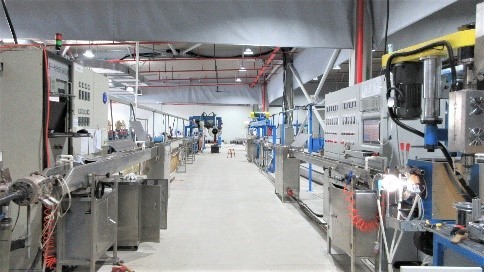
Dongguan XT Cabled Co., Ltd. is a professional manufacturer specializing in fiber optic cables and optical connectivity solutions for industrial, telecommunications, and data center applications. Established in 2012, the company is located in Dongguan, Guangdong Province, one of China's leading manufacturing hubs. With a production facility covering over 12,000 square meters and a team of more than 180 employees, XT Cabled is committed to delivering reliable, high-performance fiber optic products to customers worldwide.
The company's product portfolio includes single-mode fiber optic cables, multi-mode fiber optic cables, FTTH cables, armored fiber optic cables, outdoor fiber cables, indoor fiber cables, data center cabling solutions, industrial optical cables, and customized optical connectivity products. These solutions are widely used in telecommunications networks, broadband infrastructure, smart buildings, industrial automation systems, cloud computing facilities, and large-scale data centers.
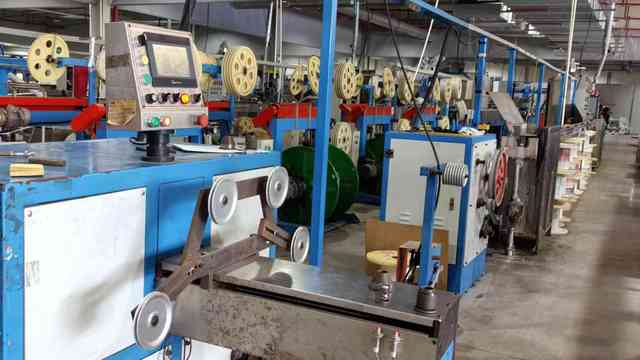
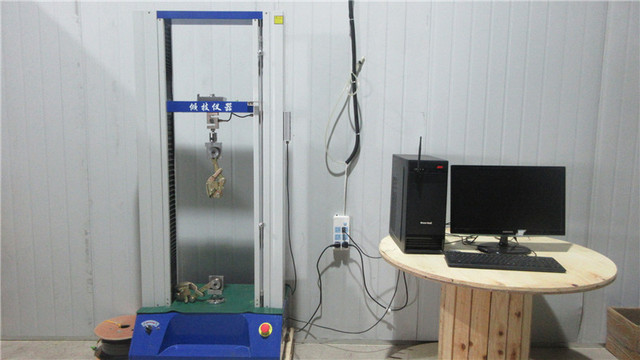
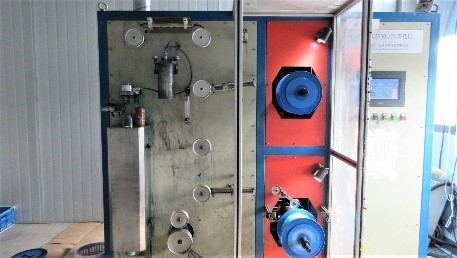
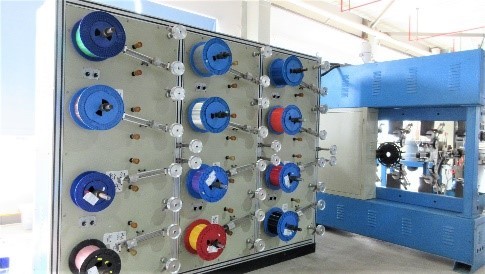
XT Cabled operates advanced production lines and testing laboratories equipped with modern inspection instruments to ensure product consistency and compliance with international quality standards. The company follows strict quality management procedures throughout material sourcing, manufacturing, testing, and delivery processes. Its products are manufactured in accordance with recognized industry standards and are supplied to customers across North America, Europe, Southeast Asia, the Middle East, and other global markets.
In addition to standard products, XT Cabled provides OEM and ODM manufacturing services, supporting customers with customized cable structures, specifications, packaging, and branding requirements. Through continuous investment in technology, manufacturing efficiency, and customer service, Dongguan XT Cabled Co., Ltd. strives to be a trusted partner for global optical communication and network infrastructure projects.
Operating out of Dongguan grants XT Cabled unparalleled access to raw material markets, specialized polymer manufacturers, and precise connector molding suppliers. This allows us to guarantee high-performance raw glass, aramid yarn, and LSZH compounds at stable price points. For projects requiring immediate logistics turnaround to border gateways, our direct rail and maritime transport links ensure fast delivery times.
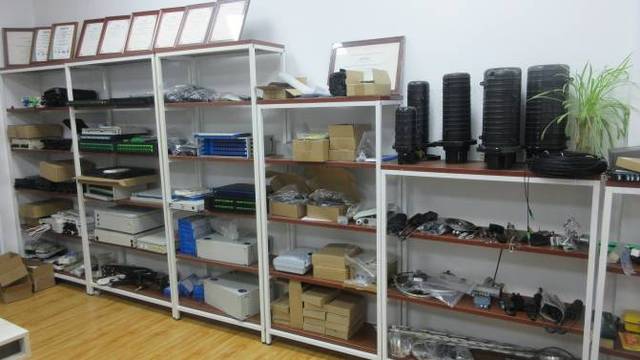
From micro-distribution breakout fibers to waterproof patch cords, explore our complete selection of connectivity solutions.
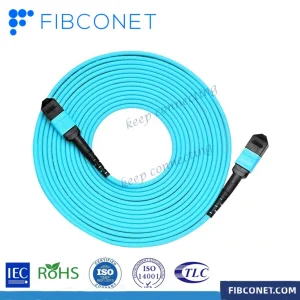
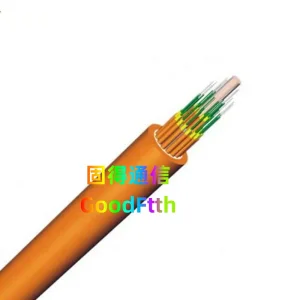
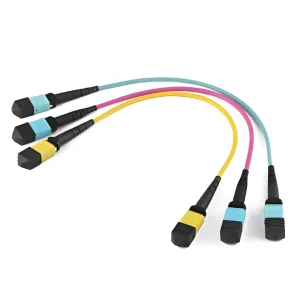
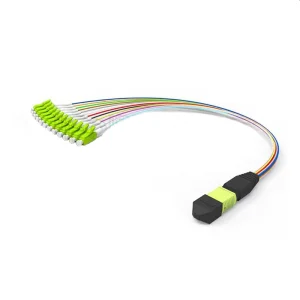
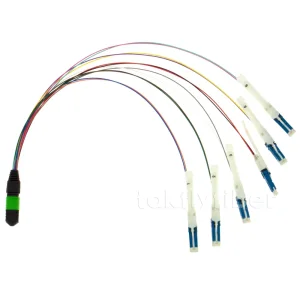
In the broader scope of global network integration, the transition from traditional copper wiring architectures to fiber-to-the-x (FTTx) platforms has accelerated the demand for high-capacity breakout fiber assemblies. Global cloud service providers, financial clearing networks, and logistics centers rely heavily on pre-terminated multi-fiber connectors like MTP and MPO. By breaking out these high-density trunks into LC, SC, or ST connectors at the distribution point, companies minimize patch cord clutter, enhance cooling efficiency, and allow seamless optical upgrades.
For operations interfacing with specific regional environments—such as key manufacturing corridors in East Asia or localized projects under specialized developmental frameworks—network components must adhere to rigorous quality metrics. The procurement of fiber optic cables for international projects demands strict conformity to global guidelines. Cable sheaths must exhibit high resistance to acid rain, UV radiation, and mechanical shearing while ensuring total electrical isolation to prevent ground loops.
To assure network integrators of absolute field reliability, XT Cabled implements a three-tier quality testing protocol before any shipment leaves our facility:
In-depth insights into selection criteria, deployment practices, and supply capabilities for high-performance networks.
A breakout fiber cable features individually jacketed and buffered sub-fibers, each reinforced with its own aramid strength member and sheathing. A distribution cable contains multiple tight-buffered fibers bundled under a single outer jacket. Breakout cables allow direct termination with standard connectors without needing fanout kits or splice trays, offering superior physical defense and simpler field termination in complex setups.
For long-distance transport, cross-border trunk lines, and metro area networks, Single-mode G.652.D or G.657.A1 (bend-insensitive) fiber cores are highly recommended due to their low attenuation at 1310nm and 1550nm wavelengths. For local enterprise systems, data centers, and short-range high-speed interconnects, OM3, OM4, or OM5 multi-mode fibers are preferred to handle 40G/100G AOC and high-density transceiver connections.
Yes. As an OEM/ODM provider, XT Cabled engineers custom cable sheaths with options like double-armoring, corrugated steel tapes for rodent protection, thick waterproof PE layers, and LSZH compositions. We can customize the fiber counts, sub-unit diameters (e.g., 2.0mm or 3.0mm), and optical parameters to meet specific mechanical and environmental demands.
Leveraging our factory location in Dongguan, Guangdong, we utilize rapid domestic freight links connecting directly to northern logistics centers and ports (e.g., Dalian, Dandong, or Tianjin). Standard production runs take 7 to 15 working days, while custom OEM configurations depend on specifications. Our logistics team handles export paperwork and transport coordination for timely arrival at your border gateway or shipping agent.
 XT Cabled